
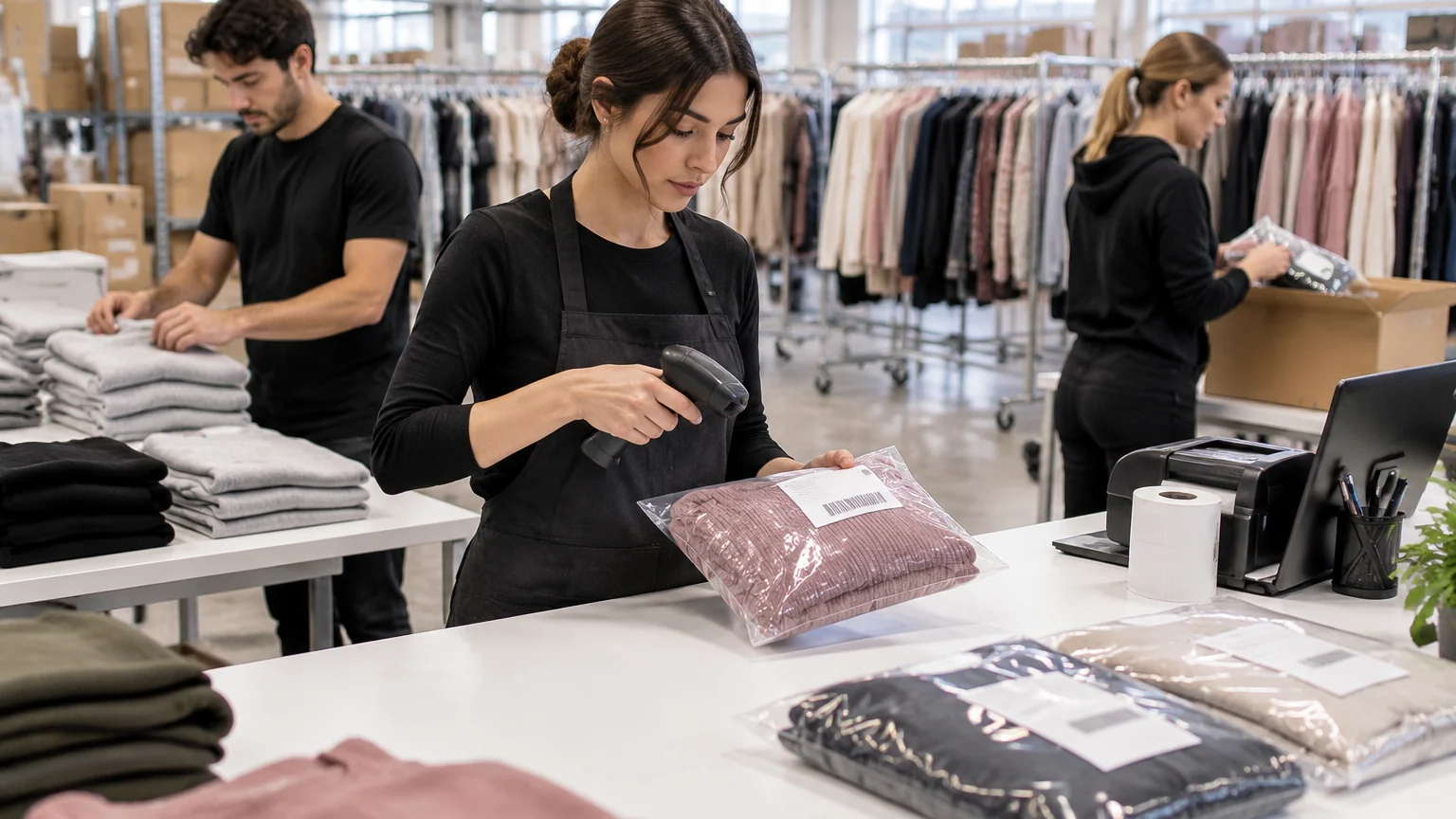
Apparel fulfillment depends on accurate variants as much as fast packing. A correct style in the wrong size is still the wrong order. Start with a controlled style-size-color record, an approved label and packaging sample, and a clear exception process before releasing customer orders.
FulfillNexa's 8,000 m² Dongguan warehouse is a large ecommerce site with multiple loading docks, focused on warehousing management and one-piece fulfillment for categories including apparel and toys. Shipment-specific work and timing should be agreed in the operating plan.
Make every variant unambiguous
Create a unique sellable SKU for each approved style, size and color combination. Map the supplier's code to the store's code and keep a photograph or sample that lets staff distinguish similar variants. Avoid relying only on a handwritten color name or a supplier's changing description.
| Control | What to record | Exception to hold |
|---|---|---|
| Variant identity | Style, size, color and barcode | Code and garment disagree |
| Receiving | Supplier batch and actual quantity | Unexplained shortage |
| Condition | Agreed visual inspection criteria | Stain, damage or missing component |
| Label version | Approved market-specific artwork | Missing or obsolete label |
| Packing | Fold, bag, insert and bundle standard | Unapproved substitution |
Treat labels as compliance data
For covered US textile products, the FTC apparel guidance explains fiber-content, origin and responsible-business labeling, along with care-label obligations. The merchant or importer should approve the label for the actual product.
Do not remove required origin information to make a China-shipped order appear domestic. Branded packaging can improve presentation without concealing manufacturing origin. Other markets need their own product-specific review; an ordinary garment does not automatically require the same conformity mark as a toy or protective garment.
A warehouse can check whether a required approved label is present and matches the SKU. Visual checking is not a laboratory test or a legal determination that the garment is compliant.
Approve packaging with a finished sample
Test the folded garment, protective bag or mailer, insert and shipping label together. Confirm that the packing protects the fabric and leaves important information readable. Marketplace FBA polybag requirements should not be presented as a universal law for every direct-to-consumer garment parcel.
For multi-item orders, define whether items share a mailer and how the system handles a missing item. If sets are sold as one unit, the component list and inventory deduction need to match the physical bundle.
Test the store-to-warehouse handoff
Verify that the connector sends the actual size and color, not only the parent product. Test a cancellation, address change, bundle and duplicate order. A successful ordinary order does not prove all exception types are handled.
Use separate statuses for received orders, held orders, released work and carrier-accepted parcels. Do not promise same-day dispatch until the cutoff, stock readiness and handling capacity are confirmed.
Build returns into the sale terms
Agree the return destination and who pays for transport. A local overseas return service is not implied by China fulfillment. Decide who can authorize refund, inspection, resale, repair or disposal, and retain a record of that decision.
Do not put returned garments back into saleable stock solely because the parcel was delivered to a return address. Condition, identity and any hygiene or market requirements need review. Return rates should come from the merchant's own records rather than an unsupported apparel-wide percentage.
For stock placement, see China-direct versus US warehouse fulfillment.
Watch-outs that show up after the first hundred orders
Three failures repeat across apparel programs. Color names are not shared across suppliers, so a batch that matches a swatch can still mismatch the listing; carry the color reference as a code with a supplier-specific mapping rather than a word. Care and composition labels are applied at different points in different factories, and a garment that arrives correctly labeled can be relabeled into noncompliance during repacking. Size runs also tend to be assumed rather than confirmed per style, which turns a sold-out medium into a return for the wrong reason. FTC apparel labeling guidance covers the US marking rules that the first two of these touch, and the practical workflow sits in apparel fulfillment under US compliance rules.
FAQ
Can I use one SKU for several sizes?
The sellable variant must be unambiguous in the order and warehouse mapping. A shared parent code alone is not enough.
Can custom branding replace origin and care labels?
No. Presentation changes must preserve applicable mandatory information.
Is a warehouse visual check a safety certification?
No. Specify the inspection scope separately from testing and product-compliance responsibilities.
Are overseas returns included automatically?
No. Confirm the actual return provider, address, charges and disposition rules before promising them to customers.
Which size-system differences cause most apparel returns?
Treating a Chinese size code as equivalent to a US or EU one. Grading intervals, ease and fit names differ between markets, so the return rate follows the size chart rather than the label. Publish measurements in the units your customer uses, keep one authoritative chart per style, and record which chart a given batch was produced against.