
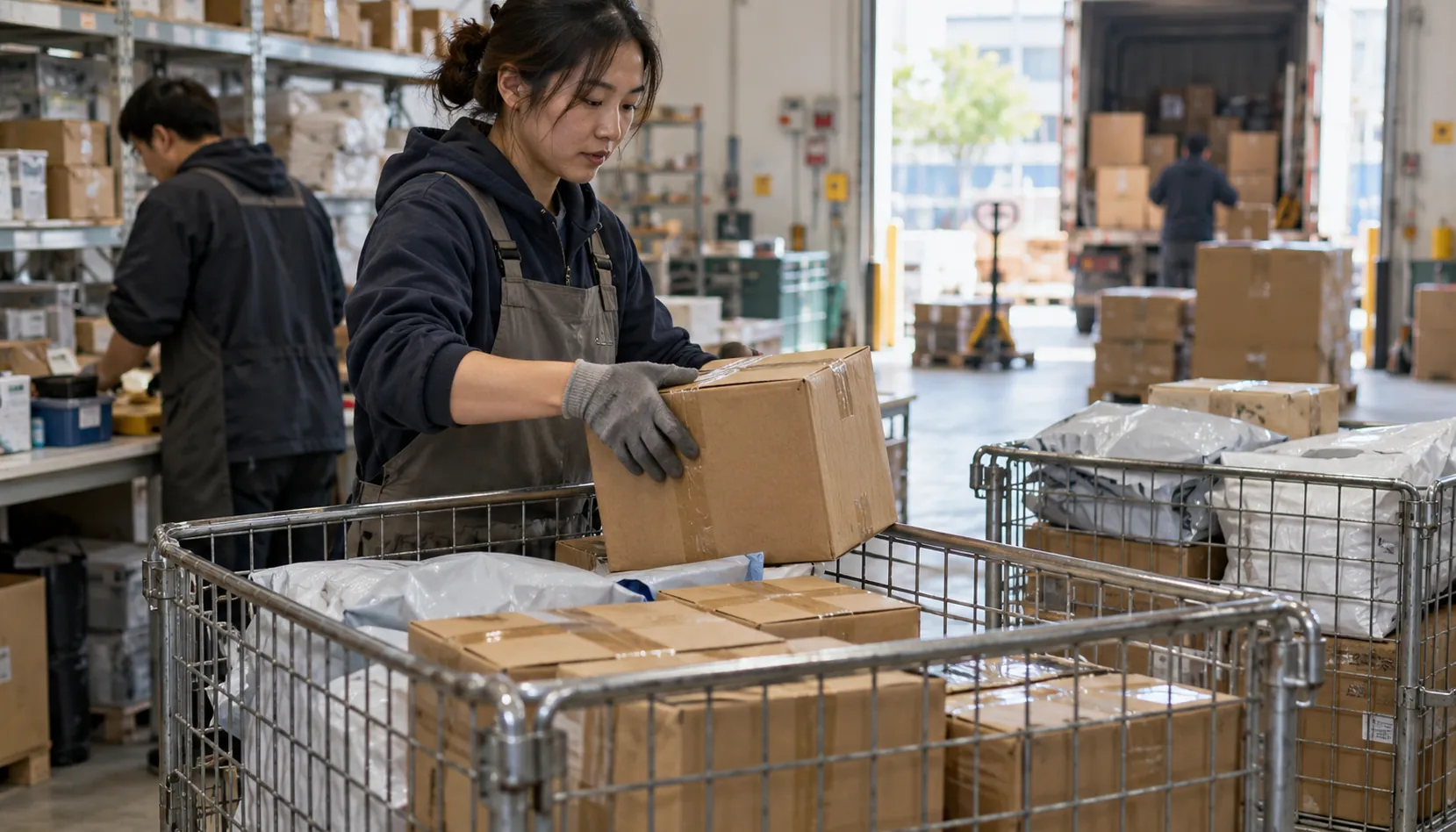
Direct small-parcel shipping from China sends individual customer orders through an eligible international service instead of first moving all stock to a destination warehouse. It can reduce the need for overseas inventory, but every order still needs correct product data, packaging, customs treatment and a workable delivery promise.
Decide which orders fit the model
Start with the product and customer location. Check packed size, weight, value, regulated contents and the destination's import requirements. A product that fits inside a small box is not automatically eligible for every small-parcel service.
Consider the commercial consequences of an international delivery for each order. Customers may need clearer tracking updates and a practical returns arrangement. High-value, fragile or urgently required products can need a different service or inventory strategy from low-risk repeat orders.
Keep destination restrictions in the routing rules. A country-wide service claim does not prove that a remote postcode or a particular commodity is accepted.
Create a dispatchable order record
The warehouse needs an approved SKU, quantity, delivery address and release instruction. The shipping system also needs the actual contents, country of origin, appropriate value and other required customs data. Those fields should refer to the same physical order.
Resolve missing information before packing. If the product description is only a supplier code, create a meaningful description rather than letting the carrier or warehouse guess what is inside. A customer order marked paid can still be unsuitable for dispatch if the address or import data is incomplete.
For FulfillNexa by SBT's China-based single-order preparation, define when the order is held, when it is released and who can approve a correction. That prevents a shipping label from bypassing a necessary product or customer check.
Choose a service by its complete specification
Compare product acceptance, tracking, chargeable weight, delivery coverage, payer arrangements and handling of undeliverable parcels. Ask for the exact service code. Postal, express and cross-border consolidator products can have materially different operating chains.
Price the packed order rather than the product's bare weight. Keep taxes and carrier service charges distinct. The former U.S. low-value duty exemption and the EU's historical low-value duty treatment should not be assumed to apply under today's arrangements.
Use destination-specific rules and current provider terms to establish the declaration path. The UPU's postal-customs resources explain the role of advance postal information, but the requirements for the selected postal or nonpostal service still need to be confirmed.
Pack and identify one physical parcel correctly
Protect the goods against the expected handling and prevent movement within the package. Record the final packed dimensions and weight. Attach the correct current label and remove conflicting old labels from reused packaging.
Do not confuse the transport label with product-compliance labeling or customs information. A scannable barcode can move a parcel through a network without establishing that the product is legally marketable or accurately declared.
Connect the packed parcel to the order and tracking identifier. If the package is repacked or the service changes, check whether the label and electronic information need to be updated before collection.
Publish a customer promise the operation can support
Separate warehouse preparation from international delivery. State the relevant dispatch event and use a service-specific estimate for the destination. Avoid converting an airline transit figure into an unconditional checkout-to-door promise.
Send a shipment notification based on the agreed physical handover event. A tracking number created in advance should not be presented as proof that the carrier already has the parcel.
Plan exceptions before the first order. Identify who investigates missing scans, answers customs questions and manages an incorrect address or rejected duty payment. Customers should receive a clear next step rather than repeated messages that merely restate the tracking page.
Run a limited operational trial
Test representative products and destinations. Verify the invoice, tracking handovers, customer communications and final delivery outcome. Include at least one controlled exception, such as an address correction before release, to confirm that the workflow can stop and recover safely.
Use the results to refine service eligibility and packaging. Direct shipping becomes a workable fulfillment model when individual orders remain traceable from stock release to resolution, including the orders that do not follow the normal path.