
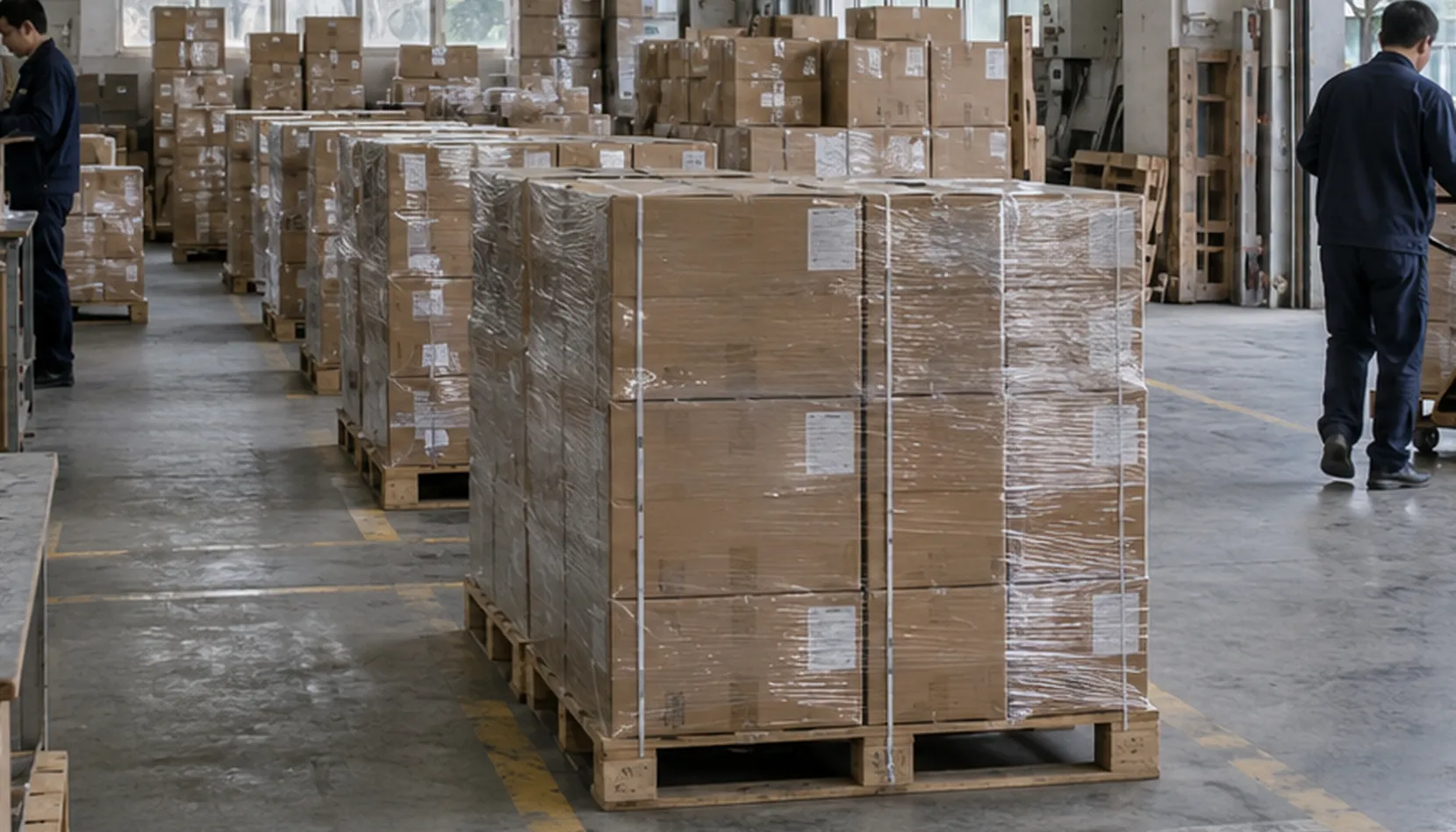
Direct small-parcel shipping and bulk consolidation distribute cost and inventory risk differently. Direct shipping releases individual orders from China. Consolidation can move stock together for later destination distribution, or combine compatible items before one dispatch. Define which arrangement is being compared before calculating savings.
Distinguish two meanings of consolidation
Combining a customer's products into one parcel changes that order's packaging and charging basis. Consolidating stock into a bulk import shipment changes where inventory waits and where individual customer orders are fulfilled. They are different decisions.
For a bulk-import comparison, name the destination warehouse and who operates it. Do not assume that a China-based fulfillment provider owns overseas storage or a returns facility simply because it coordinates international shipping.
For a combined-parcel comparison, identify the customer, delivery address and product compatibility. Orders for different recipients cannot simply share one consumer parcel without a defined lawful distribution arrangement.
Model the direct-order path
Direct shipping can keep stock in China until an order arrives. The seller avoids committing every unit to one destination market, but each customer parcel needs its own eligible service, product data and delivery process.
Calculate warehouse preparation, packaging, international parcel charges and the commercial handling of taxes and exceptions. Include the customer-support and returns plan without assuming a standard outcome or cost.
FulfillNexa by SBT's China-based order fulfillment can be assessed in that release-to-customer model. Its China warehousing service should not be described as evidence of a company-owned destination fulfillment network.
Model the destination-stock path
Bulk consolidation can spread main-transport and import activities across more units, followed by local storage and delivery. It also commits stock to a destination, creates a receiving operation and can leave unsold inventory there.
Include China preparation, consolidation, international movement, import costs, destination receiving, storage, picking and local parcels. Compare the same expected sales period rather than divide bulk costs by every purchased unit while ignoring the unsold remainder.
Maersk's LCL description explains one shared-container transport arrangement. It does not, by itself, include all destination fulfillment activities. Obtain those separate scopes and prices before treating an LCL quotation as a complete consolidated ecommerce solution.
Let demand uncertainty affect the answer
Consider a hypothetical product with unpredictable demand across several countries. Holding its stock in China can preserve allocation flexibility. Moving all units to one market may lower that market's local dispatch cost while creating an inventory risk elsewhere.
For a stable high-volume destination, the balance can change. The business may value local order delivery enough to accept bulk inventory exposure. Use its own demand history, carrying-cost assumptions and destination warehouse quotation to test that choice.
Do not create a universal break-even order count. Product density, destination charges, stock turnover and customer-service requirements change the calculation.
Compare combined parcels on the completed package
For one customer ordering several compatible products, price separate parcels against the actual combined package. Account for new dimensions, protection, handling and any change in consignment value or import treatment.
Waiting for a late item can delay the entire combined order. Establish a maximum wait or a customer-approved split rule. A small transport saving may be poor value if it breaks the promised delivery for goods already available.
Keep the order and tracking records accurate when a split or combination occurs. One checkout transaction is not necessarily one physical shipment.
Use a staged transition rather than an all-or-nothing rule
A seller can retain uncertain products in China while testing destination stock for a small set of predictable SKUs. Measure received inventory, saleable units, actual order costs and exceptions before expanding.
Compare the two paths over a complete replenishment cycle. Include the work that moves between providers and countries, not just the main freight charge. The result should explain which SKUs and markets benefit from consolidation and which retain a stronger case for direct release.
Sources and verification links
Operational rules can change. Check the linked primary sources and confirm shipment-specific requirements before booking.
- Maersk's LCL descriptionMaersk