
Make the branded package repeatable
Branding a dropshipped product from China requires more than adding a logo to a supplier photograph. The customer must receive the right product, the approved packaging, and the correct information on every order. Start with a packaging specification that a different warehouse worker could follow without asking the designer what was intended.
Define the scope of the change. A shipping label, a paper insert, a retail sleeve, a custom box, and a permanent product mark involve different costs and responsibilities. A removable insert may be suitable for a limited test, while a molded logo creates a much longer commitment. Confirm ownership and approval of the design before ordering either.
Clear the name before printing it
Check whether the proposed brand conflicts with existing rights in the markets where it will be sold. The USPTO's searching guidance describes a federal database search as one part of a broader clearance exercise. Finding no identical word in one database does not prove that a name is safe to use worldwide.
Keep the approved wordmark, color files, and artwork version in a controlled package. Specify which file is production-ready and withdraw superseded files. A supplier should not recreate a logo from a compressed screenshot or choose a similar font without approval.
Also review product photographs, licensed artwork, and claims printed on inserts. Buying an unbranded item does not necessarily give the buyer permission to use another seller's images or attach a famous character to the packaging.
Protect mandatory information
Branding must preserve applicable product identifiers, warnings, origin marking, manufacturer or responsible-party information, and traceability. The requirements depend on the product and destination. Covering an existing label with a new brand sticker can remove information the seller is required to retain.
For US textile products, the FTC's textile labeling guidance addresses fiber content, origin, and responsible-business identification. A decorative hangtag does not automatically satisfy a permanent-label requirement. Review the actual product category before deciding where each statement belongs.
Distinguish marketing origin from fulfillment location. Packing a China-made item in another country does not automatically change its country of origin. Avoid a local flag or local manufacturing wording that creates a misleading impression about where the goods were made.
Design the pack for one-unit transport
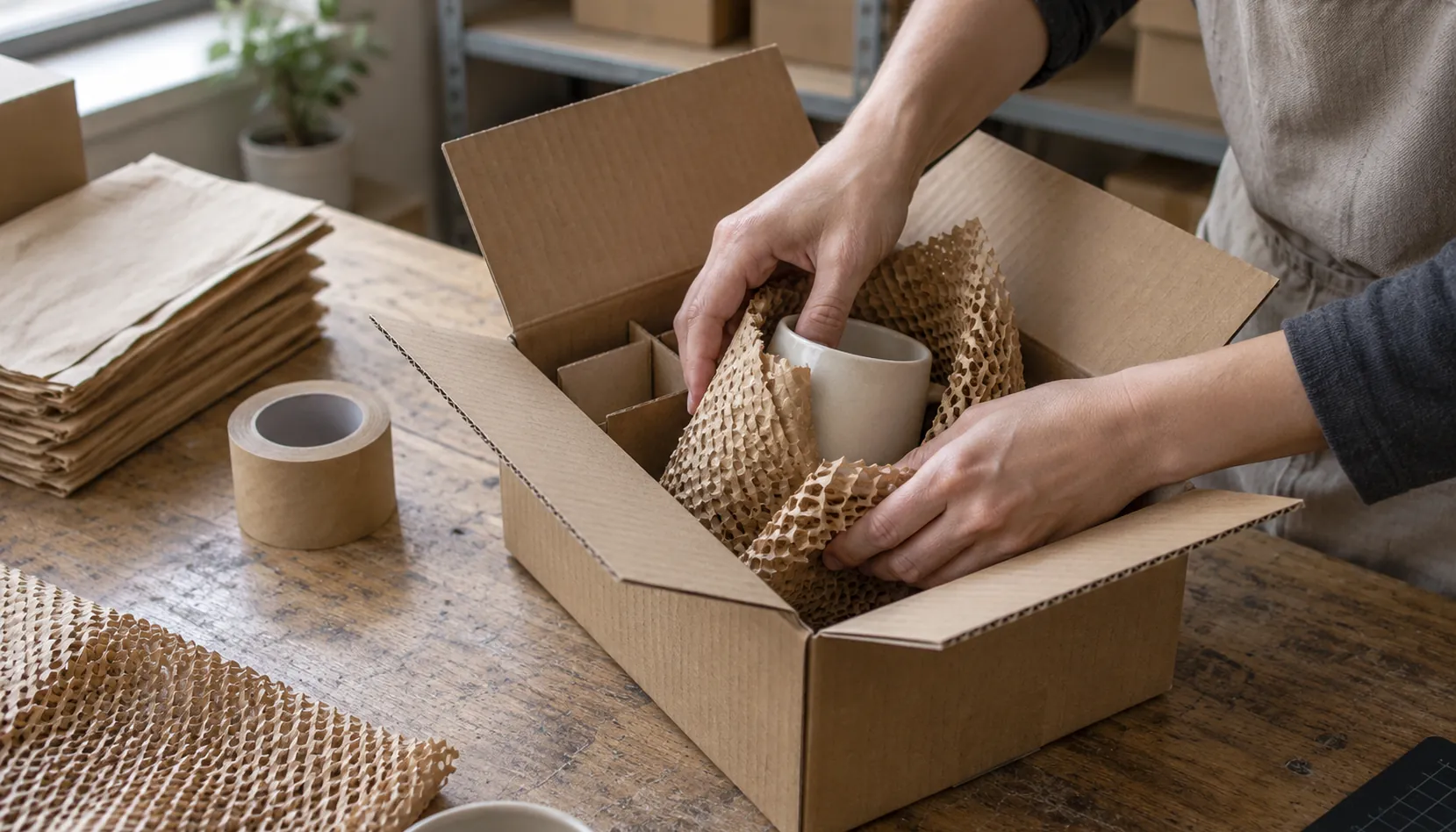
A retail box that looks attractive on a shelf may need an outer mailing package. Test the combined design with the product inside, including corners, closures, movement, and moisture exposure relevant to the chosen route. Record packed dimensions and weight after adding inserts and protection, because those measurements affect shipping charges.
Specify the order of assembly. For example, the approved instructions might require the product to be checked, enclosed in its protective wrap, placed in the retail box, and then enclosed in a shipping carton. The instruction should identify where the insert belongs and which labels must remain readable.
Keep printed materials in inventory. If an order requires a particular sleeve, the warehouse needs a policy for what happens when sleeves run out. An unauthorized plain package may disappoint the customer; stopping the order without notification creates a different problem.
Approve the received result, not only the artwork
Request an assembled production sample and photograph all sides. Check readability, alignment, color, closure, and whether important information disappears beneath tape or a shipping label. Approve the actual material and print outcome as well as the digital file.
Run a controlled first batch before expanding the packaging order. Review customer feedback about damage, opening difficulty, missing instructions, and waste. A package that uses less material can be an improvement if it still protects the item; environmental claims should describe a verifiable feature rather than calling the whole order sustainable without evidence.
Keep a revision log linking each packaging version to the orders that received it. That allows a defect or incorrect insert to be isolated quickly. Good branding becomes a consistent part of fulfillment, with the same attention to version control as the product itself.
Sources and verification links
Operational rules can change. Check the linked primary sources and confirm shipment-specific requirements before booking.
- Federal trademark searchingUnited States Patent and Trademark Office
- Threading Your Way Through the Labeling Requirements Under the Textile and Wool ActsFederal Trade Commission