
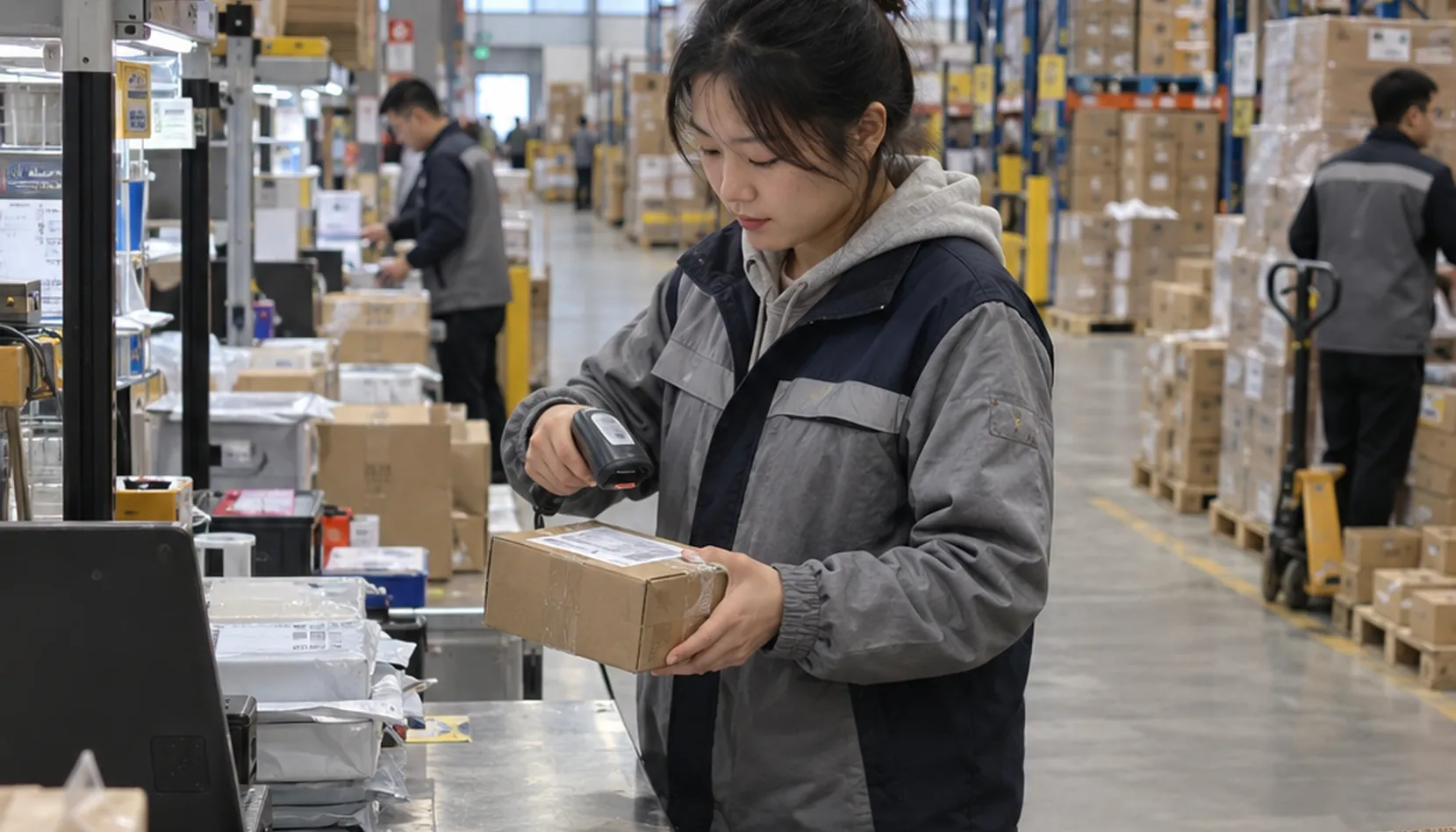
Treat ten and one thousand orders as planning scenarios
Moving from ten to one thousand daily orders is an illustrative scale change, not a promised growth path or a claim about a particular fulfillment provider. The operation must support more decisions, inventory movements, customer messages, and cash commitments. Increasing advertising before those controls work can multiply an existing problem.
Scale one reliable product-and-destination combination first. Record the current order flow and where staff intervene. Use those records to identify the next constraint rather than buying capacity simply because a larger volume target sounds desirable.
Model workload by action and exception
Count order lines, parcels, receipts, support cases, address changes, and returns. An order containing several items requires different work from a single-item order. A batch of ordinary orders and a batch containing many stockouts can consume very different staff time.
Estimate workload from observed handling times where available. Label untested assumptions clearly. Include the slower tasks and the work needed to reconcile failures, not only the time to print a label.
Define what happens when demand exceeds capacity. The response may be to stop a promotion, extend a truthful processing estimate, limit available quantities, or add a verified shift. Staff need that decision before a queue becomes a customer crisis.
Secure supply without losing change control
Agree replenishment quantities, variant-level stock visibility, and approval of substitutions. Additional suppliers can reduce dependence, but their products need separate validation. Two factories' visually similar items should not be mixed under an unchanged listing without a supportable specification.
Reserve stock where the commercial arrangement justifies it, and document ownership and aging responsibility. Check cash needs across procurement, transport, settlement delays, and customer remedies. Sales growth can consume cash even when individual orders show positive contribution.
Keep compliance records connected to the expanding supply base. A second manufacturer, new battery, or changed material can require review. Operational urgency does not make the first supplier's documents cover the replacement automatically.
Automate the stable decisions and expose the unstable ones
Use stable SKU mapping, inventory reservation, duplicate-safe order release, and tracking reconciliation. Shopify's webhook documentation explains the need to handle repeated notifications correctly. A higher order volume makes duplicate physical actions more expensive, so test those controls before unattended expansion.
Create exception queues with a named owner and clear next action. Unmapped variants, held payments, unavailable services, and conflicting cancellations should not disappear into a general error log. Staff should know which cases can be resolved and which require approval.
Retain a recovery process for system outages. Determine how orders already released are distinguished from those still waiting, so restarting an integration does not dispatch both groups again.
Build roles around decisions, not only departments
Assign authority for product approval, stock purchase, order release, customer refunds, and carrier changes. Define limits and escalation. A warehouse worker should not be forced to make a commercial substitution because no one else is available.
Support needs access to the current physical order state. Standard responses should contain verified facts and usable remedies, while unusual cases reach someone who can decide. Scaling the number of reply templates does not solve incomplete operational information.
Use staged releases of volume
Increase demand in measured steps and compare actual results with the capacity model. Review on-time physical dispatch, unresolved orders, inventory differences, support workload, refund causes, and delivered contribution. These are internal operating measures, not evidence of market-leading performance.
Pause expansion when a control breaks and fix the specific cause. Preserve the current stable volume while testing the correction where practical. Growth is sustainable when the business can explain, fulfill, and support the orders already accepted, then demonstrate that the next increase will not weaken those responsibilities.
Sources and verification links
Operational rules can change. Check the linked primary sources and confirm shipment-specific requirements before booking.
- About webhooksShopify