
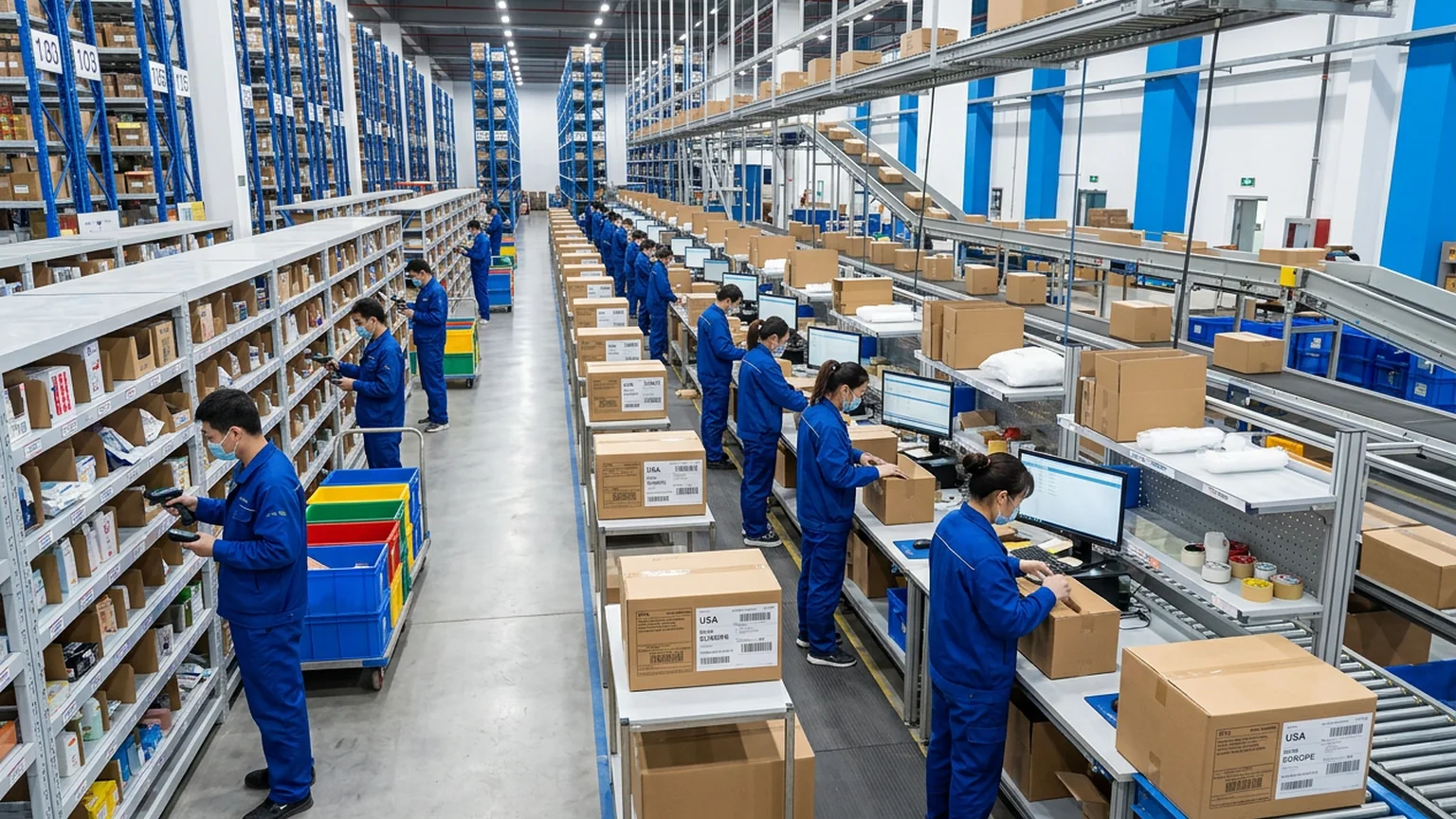
What DTC fulfillment from China actually covers
Direct-to-consumer fulfillment from China means the brand stores inventory in a China warehouse, then releases individual customer orders for international delivery. The warehouse handles receiving, storage, picking, packing and carrier handover. The brand retains control of the storefront, pricing, customer data and post-sale experience.
This model suits brands that source products in China and sell to customers in the United States, Canada, Europe and other markets. It removes the need to ship bulk inventory to an overseas warehouse before knowing demand, and it keeps the brand close to its supply base.
Keep the order data authoritative
The fulfillment workflow starts with a clean order record. Each order should carry the SKU, quantity, shipping address, declared value, HS code hint where relevant, and any packing or insert instructions. The warehouse should not infer missing fields from previous orders or product names.
Use a consistent order-file format or a confirmed platform connector. Test the mapping before going live: SKU codes, address fields, cancellations, and tracking callbacks all need to match between the store and the warehouse system.
Branded packing without losing compliance
DTC brands often want custom boxes, tissue paper, thank-you cards or bundle inserts. These can be scoped once the materials and packing instructions are reviewed. Confirm dimensions, quantities, replenishment arrangements and an approved packing example.
Required product, origin, safety and customs information must remain accurate and visible where required. A branded box does not replace a compliant shipping label or a correct customs declaration.
Shipping lane selection per order
Not every order needs the same lane. Compare eligible channels using packed dimensions, weight, product type, destination postcode, tracking needs and the agreed tax treatment. A lightweight accessory to the US may use a different lane than a bundled set to Germany.
Evaluate total quoted cost and delivery scope, not only a headline per-kilogram rate. Confirm whether the estimate starts at order release, warehouse dispatch or carrier acceptance.
Returns and exceptions
Return handling and logistics investigations must be agreed by destination and service. Confirm the return address, authorization process, inspection scope and options for restocking or disposal. Customer refunds, warranties and marketplace decisions remain with the seller unless separately agreed.
A clear exceptions workflow prevents small issues from becoming customer-facing problems. Define who decides on damaged goods, who pays for reshipment, and what evidence closes the loop.
FAQ
Can a China warehouse handle my full DTC operation?
The warehouse handles physical operations: receiving, storage, picking, packing and shipping coordination. The brand retains the storefront, pricing, customer data and post-sale decisions.
How do I keep my brand experience consistent?
Approve a packing example, confirm insert materials and replenishment, and define which customizations the warehouse may apply without re-approval.
What about customs for individual orders?
Each parcel needs a compliant customs declaration. The warehouse prepares the export information; the brand confirms product classification and declared value.
How are returns handled across borders?
Return scope must be agreed by destination. Confirm the return address, inspection process, and whether goods are restocked, repaired or disposed.
Sources and verification links
Operational rules can change. Check the linked primary sources and confirm shipment-specific requirements before booking.
- Shopify — FulfillmentOfficial source
- Shopify — International shippingOfficial source