
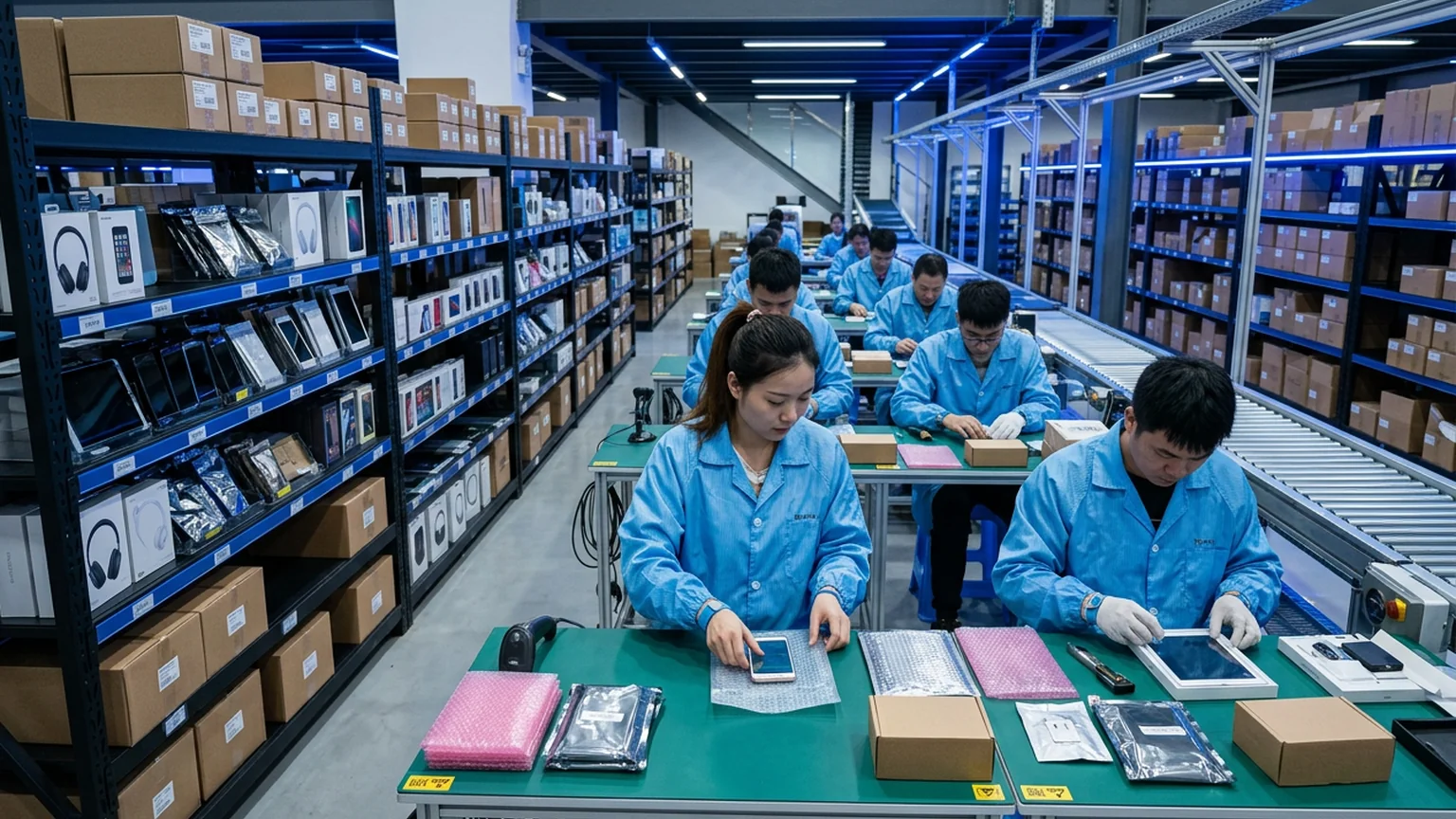
Electronics need a different fulfillment workflow
Consumer electronics—phones, tablets, earbuds, smart devices, accessories—require handling controls that generic apparel or home goods do not. Electrostatic discharge (ESD) can damage components invisibly. Lithium batteries trigger transport restrictions. Serial numbers must be tracked for warranty and recall purposes.
A fulfillment provider handling electronics should demonstrate ESD-safe workstations, battery screening procedures, and serial-level inventory tracking.
ESD-safe receiving and storage
Products should be received in ESD-safe packaging and stored in controlled areas. Workers handling bare electronics should use wrist straps or ESD-safe gloves. Storage shelving should be ESD-rated where products are stored outside their retail packaging.
Document the ESD controls in the operating agreement. "Standard warehouse handling" is not sufficient for sensitive electronics.
Battery screening at intake
Products containing lithium batteries need classification at intake: UN3480 (standalone batteries), UN3481 (batteries packed with equipment), UN3090/UN3091 (lithium metal). The classification determines packaging, labeling, and carrier acceptance requirements.
The warehouse should verify battery type, watt-hour rating, and UN classification before the product enters the fulfillment flow. Misclassified batteries can be rejected by carriers or flagged at customs.
Serial number and IMEI tracking
High-value electronics often require serial number or IMEI tracking for warranty, insurance, and recall purposes. The warehouse should scan and record the serial number at receiving and again at outbound packing, linking it to the specific order.
This creates a chain of custody: supplier serial → warehouse receipt → customer order → outbound tracking. If a warranty claim arises, the seller can trace the exact unit.
High-value security and insurance
Electronics are high-theft targets. The warehouse should have controlled access areas, camera coverage, and inventory audit procedures for high-value SKUs. Define the insurance coverage and the claim process before the first shipment.
Cycle counts for high-value SKUs should be more frequent than for general merchandise. Any discrepancy needs immediate investigation.
FAQ
What ESD controls should a warehouse have?
ESD-safe workstations, wrist straps or gloves for workers handling bare electronics, and ESD-rated storage for unpackaged products.
How are batteries classified for shipping?
By UN number: UN3480 (standalone), UN3481 (with equipment), UN3090/3091 (lithium metal). Classification determines packaging and carrier acceptance.
Do you track serial numbers?
Serial/IMEI tracking can be scoped for high-value SKUs. Scan at receiving and outbound links each unit to its order.
What about warranty returns?
Define the returns workflow for electronics separately: inspection, data wipe where required, and restock or repair decision.
Sources and verification links
Operational rules can change. Check the linked primary sources and confirm shipment-specific requirements before booking.
- IATA — Lithium battery shippingOfficial source
- ESD Association standardsOfficial source