
Home and garden fulfillment from China covers products with very different handling needs. A folded textile, a fragile ceramic item, a long rigid component and a seasonal electrical product should not enter one generic packing and shipping workflow.
Build product families around the physical risks and required acceptance, then assign a suitable receiving, storage and dispatch process to each family.
Describe the final transport unit
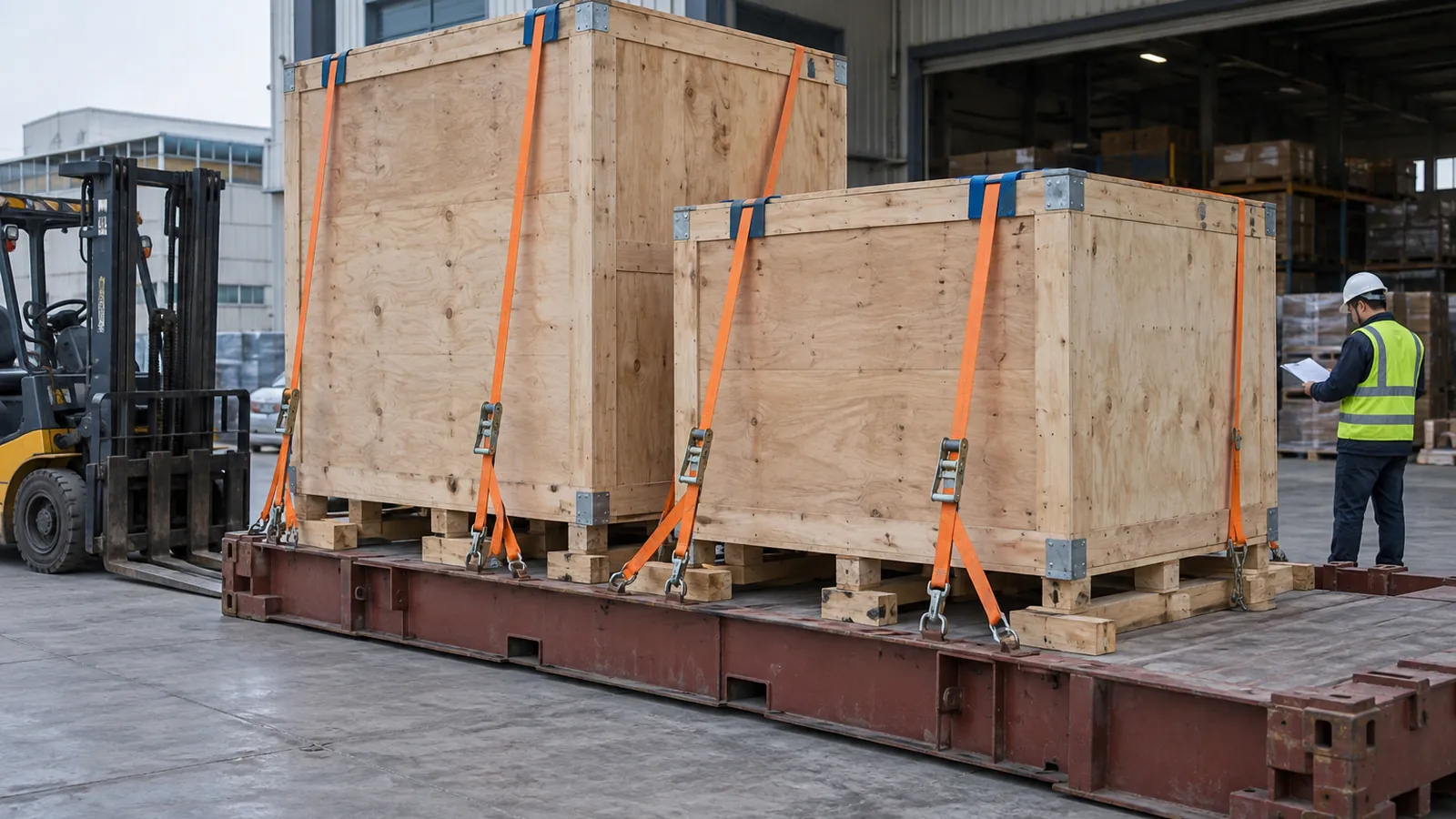
Provide finished external dimensions, weight, packaging, fragility and any handling constraints. For heavy or irregular units, obtain the approved information needed to assess lifting, support and equipment requirements.
“Oversized” is not a universal measurement that guarantees acceptance or rejection. Limits depend on the actual carrier, equipment and route. Quote and plan from the measured cargo rather than a broad catalog category.
An illustrative long component may occupy little volume yet exceed a parcel channel’s dimension limit. A compact ceramic set may fit the size limits but require a more demanding protective configuration. Neither decision can be made from weight alone.
Create a product-family exception matrix
| Product characteristic | Review before ordinary release |
|---|---|
| Fragile | Approved support, separation and package assessment |
| Long or irregular | Measured dimensions and accepted handling route |
| Heavy | Equipment, lifting and storage assessment |
| Liquid, chemical or battery-containing | Qualified classification and product-specific acceptance |
| Food-contact or child-related | Applicable product evidence and approved information |
The table identifies review needs, not a claim that a general warehouse can handle every listed product. Restricted goods require separate acceptance, and some may fall outside the agreed service.
Test the package for the actual distribution chain
Choose protection against the relevant failure mechanism: product-to-product contact, protruding parts, bending, compression or impact. Do not assume a thicker carton solves all of them.
The ISTA 3L overview describes an ecommerce testing context. Select the appropriate current procedure and acceptance criteria with the qualified product or packaging owner rather than applying one parcel test to every large item.
Record the complete configuration. Changing a divider, carton size or product combination can invalidate the assumption that the production pack matches the assessed design.
Plan storage and movement together
Consider location dimensions, access, replenishment and staging, not just available floor area. A long item placed where it obstructs movement can create a risk even when it technically fits on the rack.
The US OSHA warehousing overview identifies general material-handling and workplace hazards. Apply the relevant professional assessment and local requirements for the China site; the reference does not certify a particular facility.
Document what happens when the accepted handling equipment or packaging is unavailable. Operators need an authorized hold or alternative, rather than pressure to improvise for a scheduled collection.
Allocate seasonal stock by the saleable configuration
A seasonal kit may depend on several components and a particular pack. Count complete approved kits, not simply the most abundant main product.
For an illustrative promotion, 240 main units, 200 accessory sets and 180 approved packs support no more than 180 complete kits before existing commitments and any chosen reserve. The calculation does not establish customer demand or warehouse throughput.
Keep old and revised versions distinct when replenishment arrives. A new accessory or material can require review even if the commercial product name remains unchanged.
For assembly products, provide a countable approved hardware list and distinguish similar fittings. A missing fastener can make an undamaged item unusable, so verify the accessory kit during packing rather than leaving that discovery to customer support.
Track damage and returns by product family, pack version and route. The useful outcome is a set of accepted configurations and clear exceptions, allowing ordinary orders to flow while products outside those boundaries receive the assessment they need.
Sources and verification links
Operational rules can change. Check the linked primary sources and confirm shipment-specific requirements before booking.
- ISTA 3L ecommerce retailer fulfillment testInternational Safe Transit Association
- Warehousing overviewUS Occupational Safety and Health Administration