
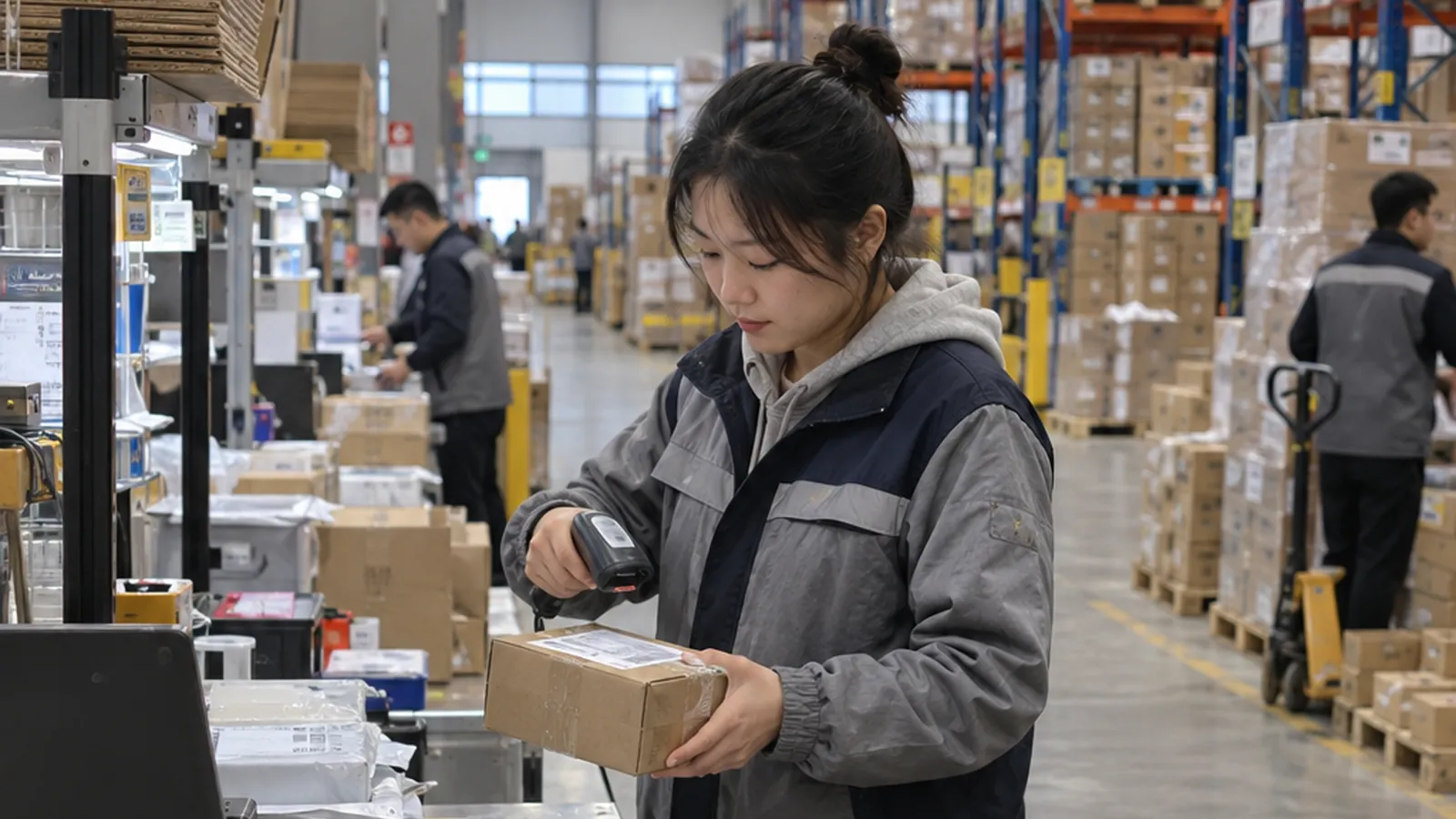
Outsourced fulfillment from China makes sense when a provider can take over a defined operating responsibility more effectively than the seller can manage it internally. The decision is not just whether a quoted pick fee is lower than an employee’s hourly cost. Receiving, inventory control, exception handling and the cost of changing providers belong in the comparison.
Start by separating the work that can be delegated from the commercial decisions that remain with the seller. Product acceptance, customer promises, marketplace settings and legal responsibilities do not disappear when goods enter a 3PL warehouse.
Decide what the contract actually transfers
List the physical tasks: supplier receipt, count verification, storage, picking, packing, labeling and carrier handoff. Then list decisions such as approving a shortage, accepting a damaged carton, changing packaging or releasing held stock.
For each decision, identify who approves it, what evidence is required and what happens while approval is pending. A provider asked to “handle everything” still needs instructions when a supplier delivers a different product or a customer requests cancellation after picking.
Use transport terms carefully. The ICC Incoterms checklist helps distinguish delivery and transport responsibilities in sales contracts. It does not replace the separate warehouse scope of work or assign every ecommerce after-sales task.
Compare costs at the same activity level
Build a cost model with receiving, occupied storage, order lines, packaging, dispatch and exceptions as separate drivers. Include integration and onboarding costs, minimum charges and the work retained by the seller.
An illustrative internal operation has $4,000 of monthly fixed cost and $0.80 of variable cost per order. An outsourced option has a $500 monthly base charge and $2.20 per order, with equivalent included work assumed. At 1,000 orders, the modeled costs are $4,800 and $2,700. At 5,000 orders, they become $8,000 and $11,500.
These invented figures demonstrate why volume changes the comparison. They do not establish a market price or a universal outsourcing threshold. Adding storage, product complexity or retained management work may change the result substantially.
Run a pilot that exposes the difficult orders
Choose representative SKUs and include deliberately controlled exceptions. A pilot containing only clean single-item orders will not reveal how the provider handles multi-item picks, supplier shortages, damaged packaging or a late cancellation.
Agree the test outcomes beforehand. For example, the warehouse should identify a receiving discrepancy, hold the affected stock, request an approval and preserve the decision trail. The test is passed by the agreed records and physical result, not by an informal assurance that the team usually manages such problems.
Require inventory reconciliation at the start and end of the pilot. Document the connection between received goods, accepted stock, completed orders and remaining units.
Retain access to operational evidence
The seller should be able to retrieve inventory balances, order histories, exception decisions and shipment references in an agreed format. Access only through screenshots makes independent reconciliation and a future transition harder.
The GS1 Global Traceability Standard provides a framework for maintaining product and movement identities. A proposed outsourcing arrangement should explain which identifiers and records it will preserve, whether or not it implements that standard directly.
Decide how customer information is shared and restricted. Give each party the data needed for its task rather than automatically exposing every customer record to every operational user.
Write the exit plan before moving all inventory
Agree how stock will be counted, open orders closed, held goods dispositioned and data exported if the relationship ends. Identify who pays for retrieval, repacking and transfer work.
Also define a pause procedure for a serious discrepancy or integration failure. The seller needs a way to stop new releases without losing the identities of orders already accepted.
The decision to outsource should rest on the normalized cost model, pilot evidence and an operable exit process. A low initial rate is valuable only when the responsibilities attached to it remain clear throughout the relationship.
Sources and verification links
Operational rules can change. Check the linked primary sources and confirm shipment-specific requirements before booking.
- Incoterms 2020 checklist and flowchartsInternational Chamber of Commerce
- GS1 Global Traceability StandardGS1