
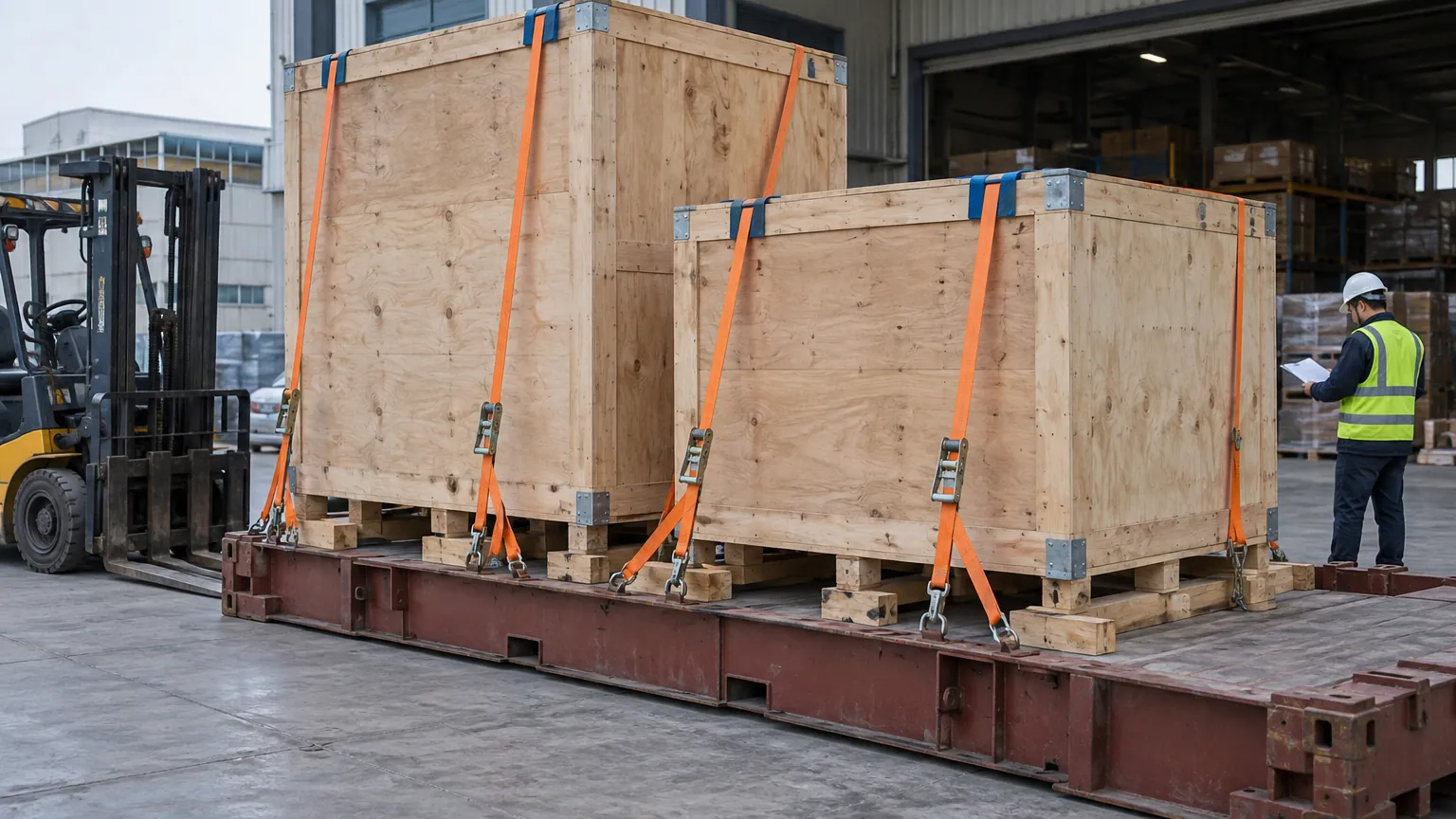
Oversized cargo should be routed only after its finished dimensions, weight, lifting requirements and destination access are known. A product that fits on a factory truck may not fit the proposed container, aircraft opening or delivery vehicle. The route must work for the packed load at every stage.
FulfillNexa's 3,000 m² Shenzhen warehouse is near the international convention center and airport corridor. It serves as a logistics consolidation hub focused on oversized cargo and sea-air / air-sea transshipment. Two other sites complete the network: Suzhou's 13,000 m² warehouse covers East China supplier consolidation and order fulfillment, and Dongguan's 8,000 m² site focuses on ecommerce warehousing and one-piece fulfillment. The three China sites total 24,000 m².
Build a load dossier before asking for rates
| Information | Why it is needed |
|---|---|
| Packed length, width and height | Equipment and opening feasibility |
| Gross weight and center of gravity | Handling and stability assessment |
| Lifting points and forklift access | Safe loading plan |
| Stackability and orientation | Capacity and securing plan |
| Product value and sensitivity | Protection and insurance discussion |
| Origin and destination access | Collection, unloading and vehicle choice |
Provide photographs and drawings where useful, but do not use photographs instead of measured dimensions. Identify removable parts and whether disassembly is actually permitted. A crate or skid added later can invalidate an earlier space quotation.
Separate packaging design from a packing service
Agree who designs the protective and securing arrangement and who approves it. Heavy or irregular cargo may need specialist engineering, lifting or restraint advice. A warehouse should not improvise lift points or assume that a visible handle is load-bearing.
If raw-wood packaging is used, review the applicable ISPM 15 treatment and marking requirements with the supplier and destination requirements. Processed wood may have different treatment. An image of a stamped crate is not evidence that the actual packaging is compliant.
Check mode feasibility before comparing speed
Ocean, air and a true sea-air combination have different equipment constraints. Request confirmation for the actual packed load rather than a generic “oversized accepted” statement. Some cargo may need special equipment or may not be suitable for the proposed air leg.
A sea-air route has real transfers and connections. Name the handling parties, transfer location and document process. A single coordinator does not eliminate physical handoffs, and Shenzhen's origin hub does not establish the feasibility of a later overseas connection.
Define the final delivery service
Curbside delivery, loading-dock delivery, indoor placement and installation are different scopes. Confirm road access, vehicle restrictions, forklift or crane availability, appointment needs and responsibility for unloading.
Incoterms alone may not explain every service detail to a buyer. Put the exact named destination and additional handling agreement into the work order. Do not promise white-glove delivery unless the actual destination service has been confirmed.
Plan exceptions and evidence
Record condition at receiving, after packing and at carrier handover. Keep package IDs connected to the packing list. Agree the procedure for a missed connection, damaged crate, refused delivery or destination access problem.
Discuss cargo insurance and carrier liability separately; neither should be assumed from a freight quote. Keep declared values accurate and obtain advice on coverage and exclusions for the actual commodity.
Request a complete option comparison
Ask each option to identify equipment, origin handling, main carriage, transfer work, clearance, final delivery and exclusions. Compare both cost and the confidence of the delivery plan. Do not rely on an unsupported percentage saving for sea-air or a universal transit range.
See sea versus air planning and multi-factory consolidation when the load includes components from several suppliers.
FAQ
Can every oversized shipment move by air?
No. Packed dimensions, weight, commodity and operator acceptance determine feasibility.
Does one coordinator mean there are no transfers?
No. Physical transfers still need clear custody, handling and exception responsibilities.
Is unloading included in delivery?
Only when expressly agreed. Confirm the destination equipment and service scope.
What should I send first?
Finished load measurements, weight, photographs or drawings, lifting information, collection and delivery addresses, and the required date.
What makes the Shenzhen leg suitable for transshipment rather than origin delivery?
Its position between the manufacturing regions and the airport corridor, which lets a unit arrive by road, be re-handled once against a known dock and equipment set, and depart on an air booking made with measured dimensions. The value is the controlled re-handle, not the geography, so the receiving standard at that point determines whether the plan holds.