
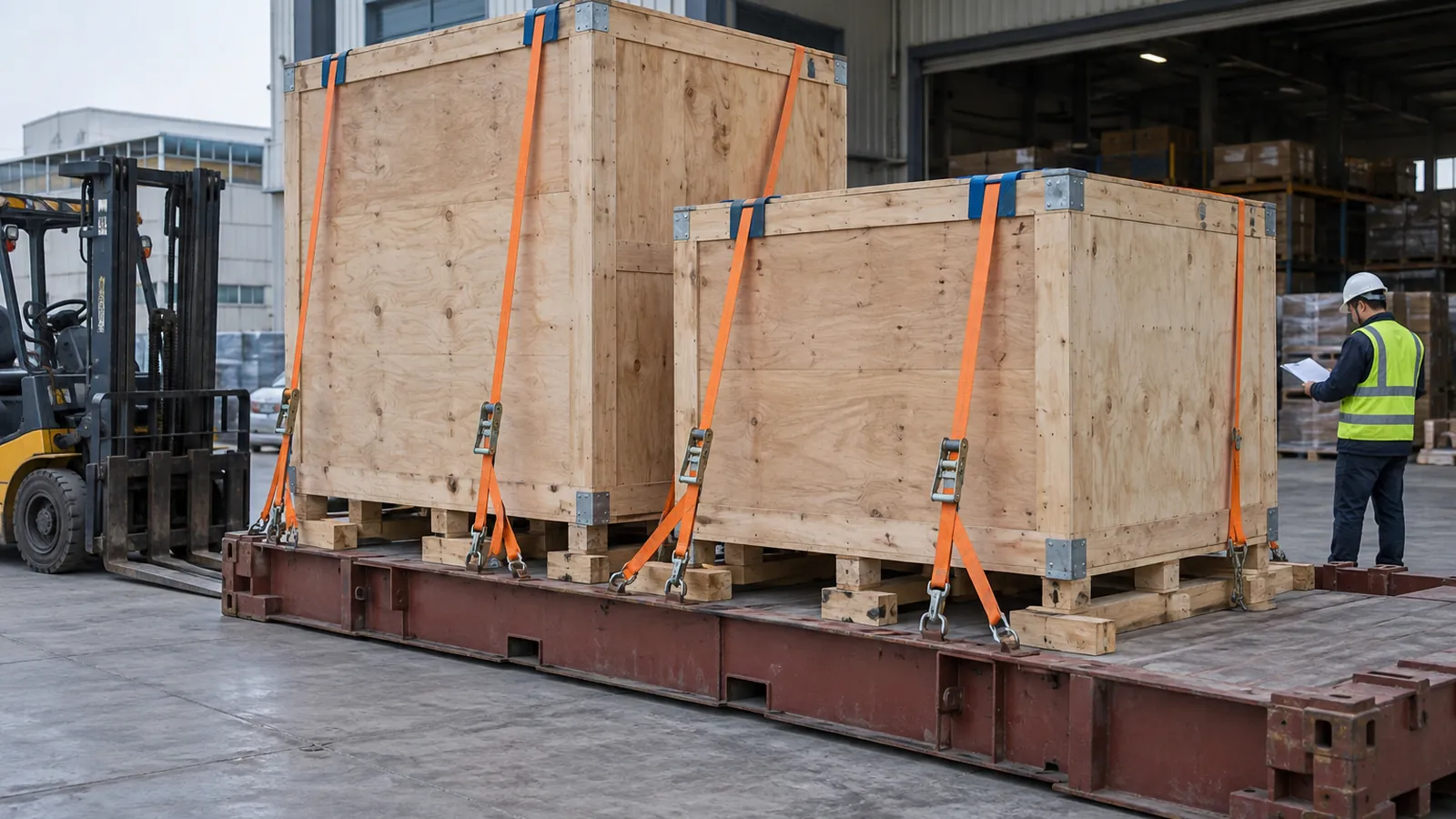
Oversized and project cargo should be planned before a freight booking is requested. The first task is to create a verified cargo data pack: final transport dimensions and weight, center of gravity, lifting points, support requirements, packaging, drawings, value, classification, origin, and destination constraints. The route can then be checked against equipment, terminals, roads, permits, handling resources, customs, and final-site access.
Do Not Rely on a Universal “Oversized” Threshold
A cargo unit may be ordinary for one vessel or terminal but out of gauge, overweight, or operationally restricted for another. Limits can differ by container or aircraft type, carrier, port, airport, road, bridge, crane, season, and local permit. Ask each executing party to confirm acceptance against the final cargo data.
Project cargo can include machinery, production lines, tanks, construction components, energy equipment, or multiple coordinated units. Not every project-cargo unit is oversized, and not every oversized unit is a complete project. The planning method should reflect the actual cargo and route rather than the label.
Do not book using estimated factory dimensions if skids, crates, saddles, moisture barriers, or protective frames will be added later. The transport envelope is the finished package, including protrusions, lifting attachments that remain in place, and any base structure.
Build a Cargo Data Pack
For each piece, record:
- Plain-language commodity description and intended use
- Manufacturer, model, serial or piece reference where applicable
- Quantity, country of origin, value, and proposed classification
- Bare and packed length, width, height, gross weight, and net weight
- Center of gravity in three dimensions
- Approved lifting points and lifting restrictions
- Contact or bearing points, floor-loading information, and support design
- Stackability, orientation, weather, vibration, shock, or temperature limits
- Packaging drawings and current photographs of the prepared cargo
- Hazardous, pressurized, fuel, oil, battery, magnetic, or chemical status
Engineering drawings should have a revision number and unit of measurement. If the cargo changes, reissue the data pack and reconfirm the route. A small dimensional or weight change can affect equipment selection, lifting, permits, or terminal acceptance.
Engineer Packing, Lifting, and Securing
Packaging and securing are separate questions. A crate may protect a surface but still require a designed base, blocking, bracing, or lashing for transport forces. Heavy cargo must not be assumed stable simply because of its mass.
The UNECE CTU Code, developed with the International Maritime Organization and International Labour Organization, is a non-mandatory global code of practice for packing and handling cargo transport units. It addresses information flow, CTU suitability, load distribution, packing, and securing. Use it as a baseline reference, then apply the carrier’s rules, equipment limits, cargo-specific engineering, and applicable law.
The lifting plan should name the qualified party responsible for the method and define lifting points, sling angles, spreader needs, exclusion zones, communication, and weather limits. Do not infer lifting points from the strongest-looking part of a machine. Do not state that a site or logistics provider has suitable cranes, forklifts, rigging, or licences until the actual requirement and resources are verified.
Survey the Complete Route
A route survey should extend beyond the international port or airport. Check factory access, gate and road width, turning radius, overhead clearance, bridge or axle restrictions, loading area, origin terminal acceptance, transshipment constraints, destination terminal, permit route, and final-site unloading position.
For multimodal plans, verify how the cargo transfers between truck, vessel, rail, barge, or aircraft. Record whether it remains on the same platform or must be lifted and resecured. Every transfer needs an accountable operator, an approved method, and a condition record.
FulfillNexa by SBT uses a 3,000 m² Shenzhen operating site for large-cargo handling and coordination of sea-air options. Depending on confirmed requirements, its role can include receiving information, staging, checking agreed preparation, and coordinating handoffs. This site description is not a customer project example or a guarantee that a specific piece, handling method, or transport plan will be accepted. Final equipment, space, safety, and carrier acceptance must be checked for each shipment.
Resolve Customs and Commercial Roles
Project cargo still requires accurate commodity descriptions, classification, origin, valuation, and admissibility review. A production line may contain components with different classifications or controls. Used equipment, wood packaging, controlled technology, pressure vessels, engines, or machinery containing fluids can create additional questions. Identify them before export packing is closed.
For U.S. imports, CBP guidance explains that importers are expected to exercise reasonable care and provide accurate entry information, including classification and value. Other countries apply their own laws and agency requirements. Confirm the importer of record, customs broker, required permits, and document owner at destination. A freight forwarder’s coordination does not transfer every legal duty away from the importer or exporter.
Also align the sale contract with transport execution. ICC explains that Incoterms rules allocate selected obligations, costs, and risks but do not replace the contract of sale or determine ownership, payment, tariffs, prohibitions, or all delay consequences. State the chosen rule, precise named place or port, and version, then separately document insurance, lifting, storage, permits, demurrage exposure, and final unloading.
Create Hold Points and Change Control
Use written hold points so cargo does not move before critical facts are accepted. Typical hold points include final drawings, packed measurement, lifting-plan approval, route and permit confirmation, carrier acceptance, customs-document review, and release to load.
When any dimension, weight, package, route, vessel, aircraft, terminal, or delivery site changes, identify which approvals must be repeated. A revised booking alone is not enough if the engineering or permit basis has changed.
Oversized Cargo Readiness Checklist
- Assign a unique reference to every cargo piece and drawing revision.
- Verify final packed dimensions, weight, center of gravity, and support points.
- Confirm commodity description, classification, value, origin, and special attributes.
- Approve packaging, lifting, blocking, bracing, and lashing through qualified parties.
- Survey factory access, origin gateway, transfers, destination route, and final unloading area.
- Obtain carrier, terminal, equipment, and permit acceptance for the exact cargo data.
- Name the importer, broker, exporter, document owners, and agency requirements.
- Record Incoterms, named place, version, insurance, and separate cost responsibilities.
- Define handoff evidence, condition reports, escalation contacts, and contingency decisions.
- Stop and revalidate affected approvals whenever cargo or route data changes.
Information Needed for a Project Cargo Review
Provide origin and final-site addresses, cargo-ready target, commodity and use, drawings, photographs, final or expected packed measurements, weight, center of gravity, lifting points, support details, packaging plan, special attributes, value, origin, destination importer, proposed Incoterms rule, and site-access restrictions. Clearly mark which data is confirmed and which remains preliminary.
Good project logistics begins with controlled facts. A defensible plan connects the physical cargo, engineered handling, feasible route, customs record, contract responsibilities, and change approvals before the first lift.
Sources and verification links
Operational rules can change. Check the linked primary sources and confirm shipment-specific requirements before booking.
- CBP Importing into the United StatesOfficial source
- UNECE CTU CodeOfficial source
- ICC Incoterms and commercial contractsOfficial source