
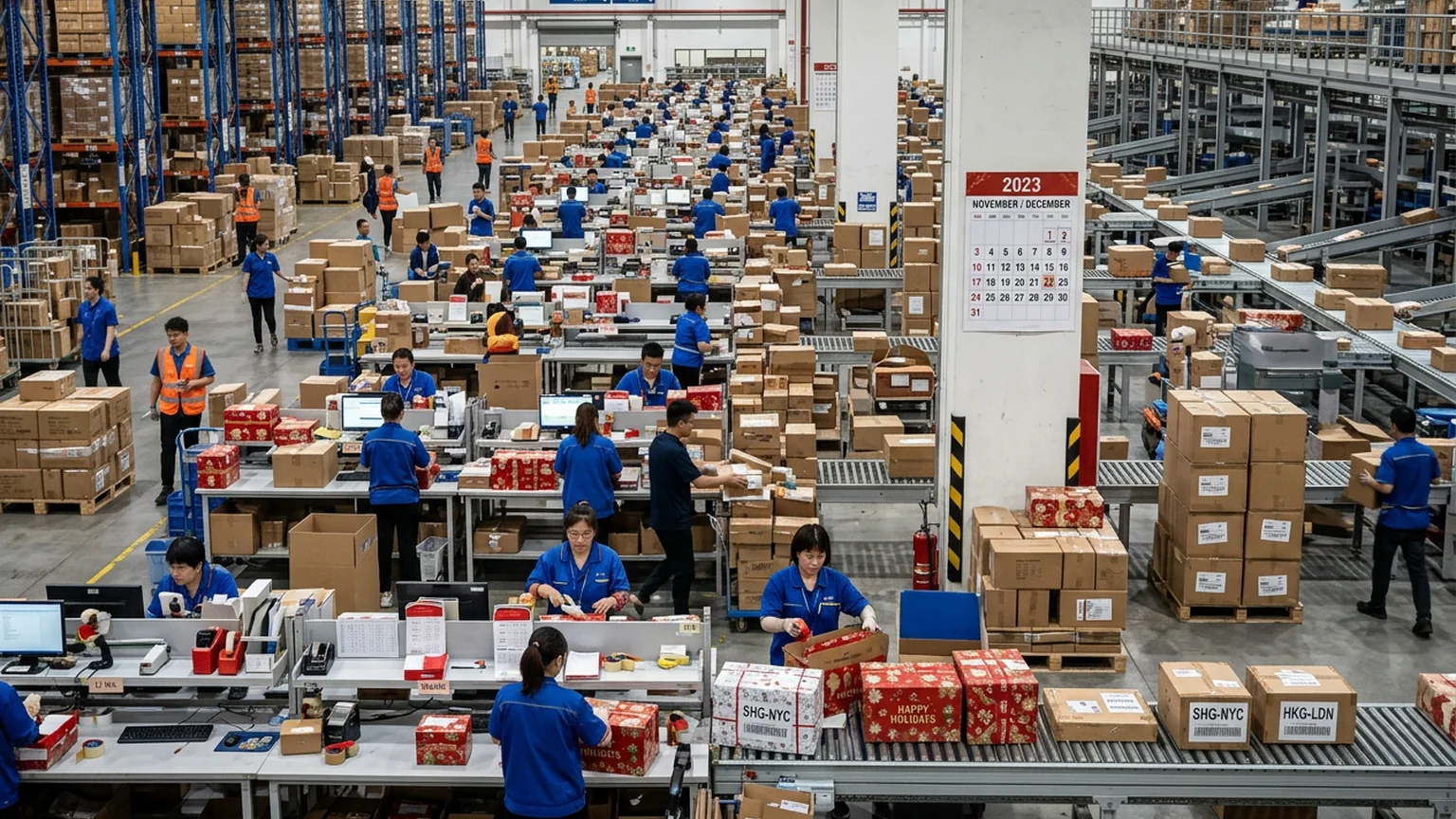
Q4 peak season affects every part of the supply chain
October through December is the busiest period for ecommerce fulfillment worldwide. China-origin shipments face increased demand for warehouse labor, carrier capacity, and air freight space. Sellers who plan early secure better rates and more reliable delivery.
Peak season planning should begin in July or August, not October.
Inventory positioning before peak
Build inventory positions in the China warehouse before peak season demand hits. The warehouse should confirm receiving capacity, storage availability, and labor allocation for the expected volume increase.
Consider building inventory in August-September for October-November sales. Late inventory builds risk delays from port congestion, air freight capacity constraints, and warehouse backlog.
Lane capacity and surcharges
Carriers implement peak season surcharges (PSS) from October through January. Air freight rates can double or triple during peak weeks. Sea freight space becomes limited, and roll-overs (cargo left behind) increase.
The warehouse should provide dated rate estimates with peak season surcharge disclosures. Compare contracted rates vs. spot rates and decide when to lock in capacity.
Extended cut-off times and labor
During peak season, the warehouse may extend operating hours, add temporary workstations, and increase staff. Confirm the extended cut-off times for order processing and the expected throughput capacity.
Define the overflow workflow: what happens when order volume exceeds the warehouse's peak capacity? Does the warehouse queue orders, prioritize by lane, or escalate to the seller?
Contingency planning
Peak season brings disruptions: carrier delays, weather events, port congestion, and sudden demand spikes. The warehouse and seller should agree on contingency workflows: alternative lanes, communication protocols, and customer notification procedures.
A contingency plan is not pessimism—it is operational readiness. The sellers who navigate peak season successfully are those who planned for disruptions before they occurred.
FAQ
When should peak season planning start?
July or August for October-November sales. Late builds risk delays from capacity constraints and warehouse backlog.
How much do peak season surcharges add?
Air freight rates can double or triple. Sea freight PSS varies. Get dated estimates with surcharge disclosures.
What if order volume exceeds capacity?
Define the overflow workflow in advance: queue orders, prioritize by lane, or escalate. The warehouse should not make commercial decisions.
How do you handle disruptions?
Agree on contingency workflows: alternative lanes, communication protocols, and customer notification procedures before peak season.
Sources and verification links
Operational rules can change. Check the linked primary sources and confirm shipment-specific requirements before booking.
- DHL — Peak season guideOfficial source
- Flexport — Peak season insightsOfficial source