
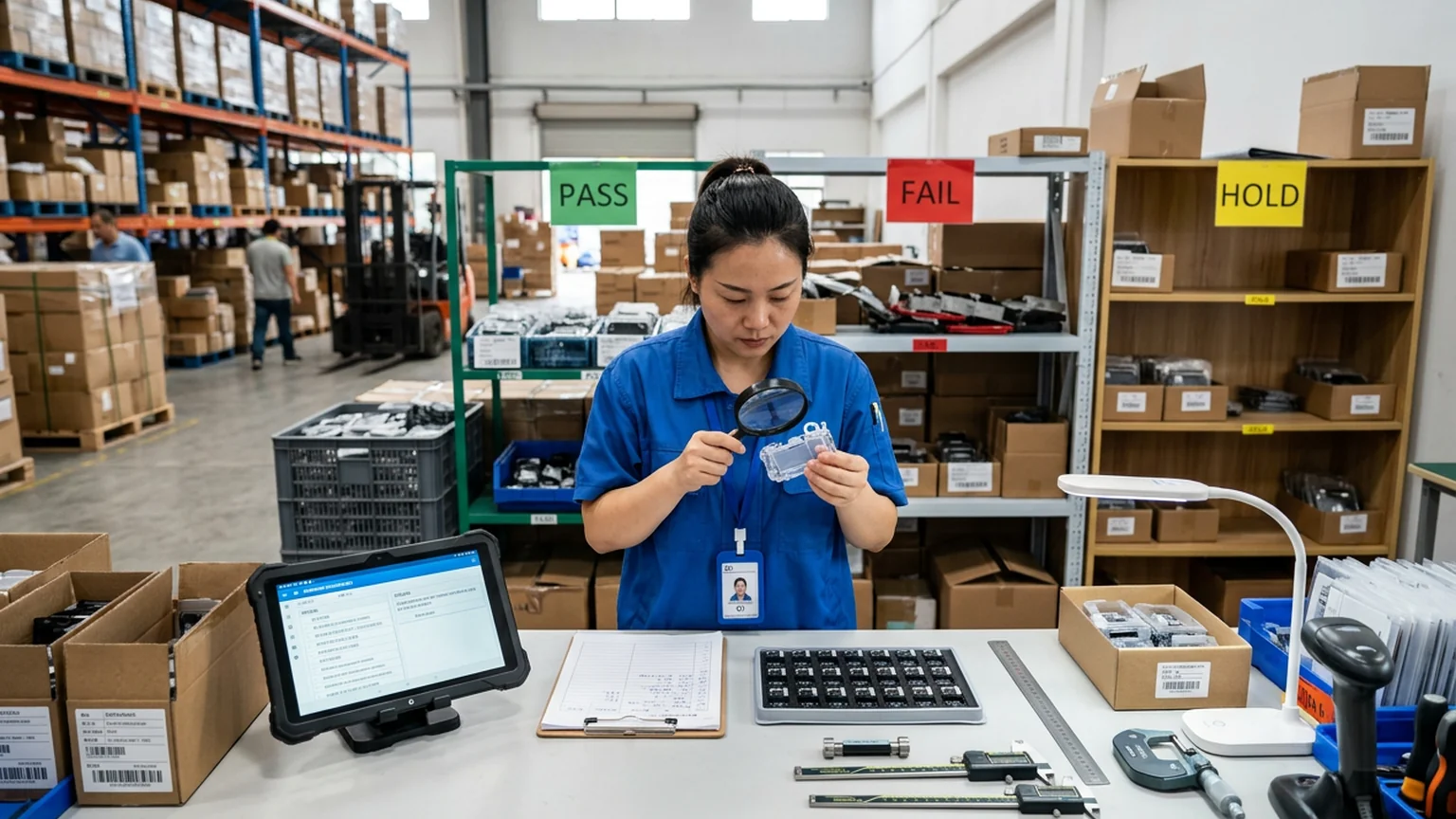
Inspection prevents problems from reaching customers
Pre-shipment quality inspection catches defects, quantity errors, and compliance issues before products leave China. Once a defective product reaches an overseas customer, the cost of resolution—return shipping, replacement, negative review—far exceeds the cost of catching it early.
The inspection scope should be defined in the operating agreement, not assumed from industry norms.
Define inspection depth per product
Inspection depth varies by product: a quantity count and visible condition check is different from functional testing, certification verification, or a complete quality audit. Define what "inspection" means for each SKU.
Common inspection levels: basic (count, visible condition, barcode check), standard (plus measurements, function test, packaging check), and comprehensive (plus certification review, safety testing, and detailed reporting).
Sampling plans and AQL
For large shipments, inspecting every unit may not be practical. Use a sampling plan based on Acceptable Quality Limit (AQL) standards. AQL defines the maximum number of defects acceptable in a sample for the batch to pass.
The seller should specify the AQL level, sample size, and defect classification (critical, major, minor) before receiving. The warehouse inspects the sample and reports results.
Photo evidence and documentation
Every inspection should produce documented evidence: count sheets, defect photographs, measurement records, and a summary report. This evidence protects both the seller and the warehouse.
Photograph defects immediately with clear lighting and a reference scale. Store photos with the batch record. If a customer later reports a defect, the inspection photos establish whether it was present at shipment.
Release gate and escalation
Products should not ship until inspection results are reviewed and approved. Define the release gate: who reviews the report, what triggers escalation, and what actions the warehouse may take without approval.
A clear escalation path prevents delays. If 5% of a batch fails inspection, does the warehouse hold the entire batch, ship the passing units, or wait for the seller's decision? Define this in advance.
FAQ
What inspection levels are available?
Basic (count, visible check), standard (plus function test, measurements), comprehensive (plus certification review). Define per SKU.
How does AQL sampling work?
AQL defines the maximum acceptable defects in a sample. The seller specifies AQL level and sample size; the warehouse inspects and reports.
What evidence should inspection produce?
Count sheets, defect photos with scale reference, measurement records, and a summary report stored with the batch record.
What happens if inspection fails?
The batch is held and escalated per the agreed process. Define in advance whether to hold all, ship passing units, or await seller decision.
Sources and verification links
Operational rules can change. Check the linked primary sources and confirm shipment-specific requirements before booking.
- ISO 2859 — Sampling proceduresOfficial source
- QIMA — Quality inspectionOfficial source