
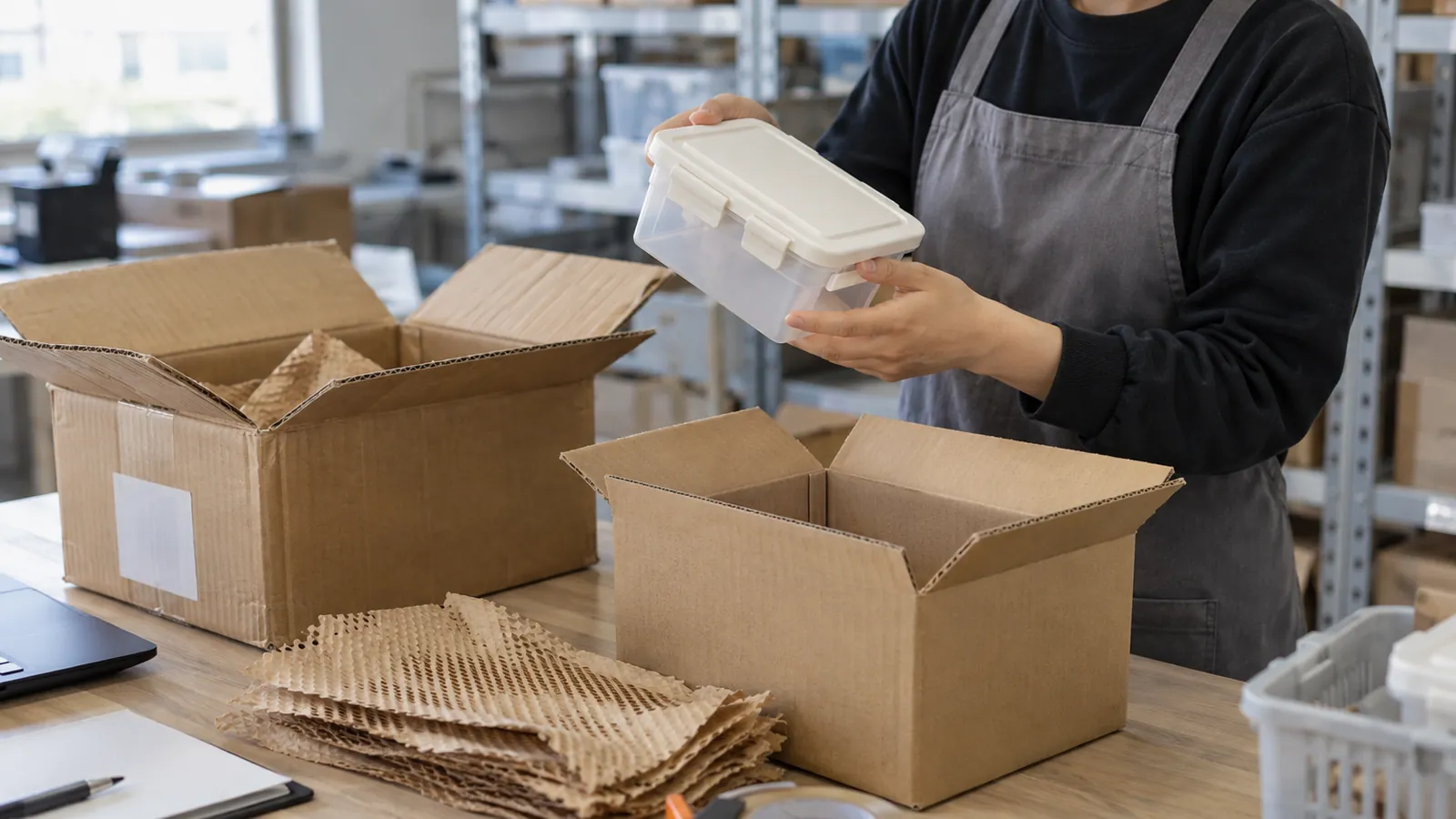
A returns warehouse in China needs a controlled route from receipt to approved disposition. Its layout should prevent an unidentified or unsafe returned item from mixing with saleable inventory before anyone decides what it is.
Design that process before choosing extra floor space. Return volume, product risk, examination time and the proportion requiring specialist decisions determine the operating requirements more directly than the number of inbound parcels alone.
Define the returns the operation will accept
List eligible products, owners, return origins and allowed work. Include conditions that require refusal or advance review, such as undeclared batteries, leakage, uncertain identity or a possible safety incident.
The receiving address and authorization process must be agreed for the actual China operation. FulfillNexa’s delivery points outside China do not receive return or inspection goods. A seller using an independent destination provider needs a separate arrangement rather than assuming international delivery coverage includes local return receiving.
Define who supplies customs and transport information for goods moving back to China. A prior export does not, by itself, settle the documents or treatment of the return movement.
Arrange the physical flow around decisions
Provide distinct areas or controlled statuses for expected receipts, unidentified goods, initial examination, approved work, released stock and rejected disposition. The separation can combine physical locations with system controls, but operators must be able to recognize it reliably.
Keep products requiring special handling outside ordinary processing until acceptance is confirmed. Do not create a generic “repair table” and assume it is suitable for electrical, chemical or contaminated products.
The US OSHA warehousing overview identifies general material-handling and workplace hazards. Use the relevant hazard categories when planning, while applying the professional assessment and local requirements appropriate to the China facility.
Create a return record at receipt
Record authorization, original order, SKU, quantity, customer-reported reason, visible condition and the identifiers needed for the product. Photograph discrepancies that affect ownership, value or disposition.
An item without a matching authorization should remain traceable as an exception. Giving it a temporary internal identifier is better than placing it in an unrecorded miscellaneous pile.
The GS1 Global Traceability Standard provides a reference for maintaining object and event relationships. A returns workflow should similarly retain the link between the original unit, receipt, examination and subsequent movement.
Plan labor from the condition mix
An illustrative day contains 120 straightforward returns needing five minutes each and 30 complex cases needing twenty minutes each. The basic examination workload is 600 + 600 minutes, or twenty labor hours.
If the staffing model assumes five productive examination hours per person, that portion needs four equivalent assignments. The example excludes receiving, customer decisions, movement, supervision and other work. It is not a FulfillNexa staffing or throughput claim.
Measure the queue for complex cases separately. Adding receiving capacity will not clear a backlog waiting for technical or commercial approval. Set an escalation process for decisions that the warehouse cannot make independently.
Make disposition a controlled inventory transaction
Define which evidence permits restock, repack, supplier return, further technical assessment or another authorized outcome. Require approval appropriate to the product and its intended channel.
Released stock should carry the correct condition and identity. A returned unit accepted for a used-sales channel must not become indistinguishable from new stock because both share a commercial SKU.
Reconcile the received quantity to released, held, transferred and dispositioned units. Record shrinkage investigations instead of hiding differences inside a net adjustment.
Before opening the process to normal volume, run a trial containing an unmatched parcel, a wrong variant, missing accessories and a safety hold. The design is ready when each item remains identifiable and reaches an authorized outcome without contaminating saleable inventory.
Sources and verification links
Operational rules can change. Check the linked primary sources and confirm shipment-specific requirements before booking.
- Warehousing overviewUS Occupational Safety and Health Administration
- GS1 Global Traceability StandardGS1