
Design the final delivery before booking the ocean leg
Oversized furniture can clear a port and still fail at the buyer's doorway. Before shipping from China to the United States, verify the packed dimensions, safe handling method and complete delivery route. A freight quotation to a residential postcode does not automatically include stairs, room placement, unpacking or assembly.
Create a specification for every piece and every outer package. Record product dimensions, detachable parts, crate dimensions, gross weight, lifting points, center-of-gravity concerns and stacking restrictions. Use the finished export package for transport calculations; the dimensions of the assembled chair or table are not the dimensions of its crate.
Check the destination's usable access
Ask the consignee for net clear doorway width and height, stair and corridor turns, elevator opening and cabin dimensions, and any building restrictions. Measure the actual opening with doors and fixtures considered. A nominal door size or a single diagonal measurement does not prove that a rigid crate can negotiate a turn.
Determine whether the item can be safely unpacked or partly disassembled before entry. The manufacturer should identify permitted disassembly and reassembly steps. Do not have a delivery crew remove structural parts or lift a heavy cabinet by decorative trim because the route was not checked.
Confirm vehicle access, parking, appointment rules and whether a liftgate or other unloading equipment is suitable for the package. A liftgate has its own platform and weight limits; ordering one does not resolve every oversized load. For difficult pieces, obtain a qualified handling assessment before shipment.
Specify the handover in the quote
Write whether the purchase is port collection, commercial dock delivery, residential curbside, threshold delivery or an agreed inside service. Define unloading, stairs, debris removal and assembly individually. “Door-to-door” is too broad to settle those tasks.
Provide the final carrier with dimensions and restrictions early. A destination transfer into a vehicle that cannot safely accommodate the crate can create additional handling and storage. Compare sea FCL, sea LCL and any feasible urgent alternative using the same final endpoint, rather than comparing port freight with an inside-delivery price.
LCL introduces more consolidation and deconsolidation handling. FCL can reduce some handling, but does not by itself establish economical delivery for a small order or safe container loading. Ask how non-stackable space, oversize pieces and destination handling will be billed under the actual tariff.
Separate the furniture from its wood packaging
Material compliance begins with an accurate bill of materials. Identify solid wood species, engineered panels, upholstery and other regulated components. The rules for the product and for its crate can differ.
APHIS wood-packaging guidance addresses regulated wood packaging entering the United States and applicable treatment and marking. Confirm whether solid-wood pallets, crates and dunnage are covered, and source compliant packaging. Do not claim every processed-wood packing material requires the same treatment, or assume a mark on one pallet covers all separate wood pieces.
For furniture containing regulated composite wood, review EPA's TSCA Title VI guidance. Determine the applicable certification, labeling, records and import requirements for the actual components or finished goods. A treatment mark on a shipping crate is not evidence of formaldehyde compliance for the furniture inside.
The APHIS Lacey Act filing page explains declaration implementation, including the electronic-submission change from January 2026. Have the importer and broker check the actual tariff classification and materials for declaration applicability. Do not state that all furniture is exempt or that every item needs identical data.
Pack for pressure, movement and handling
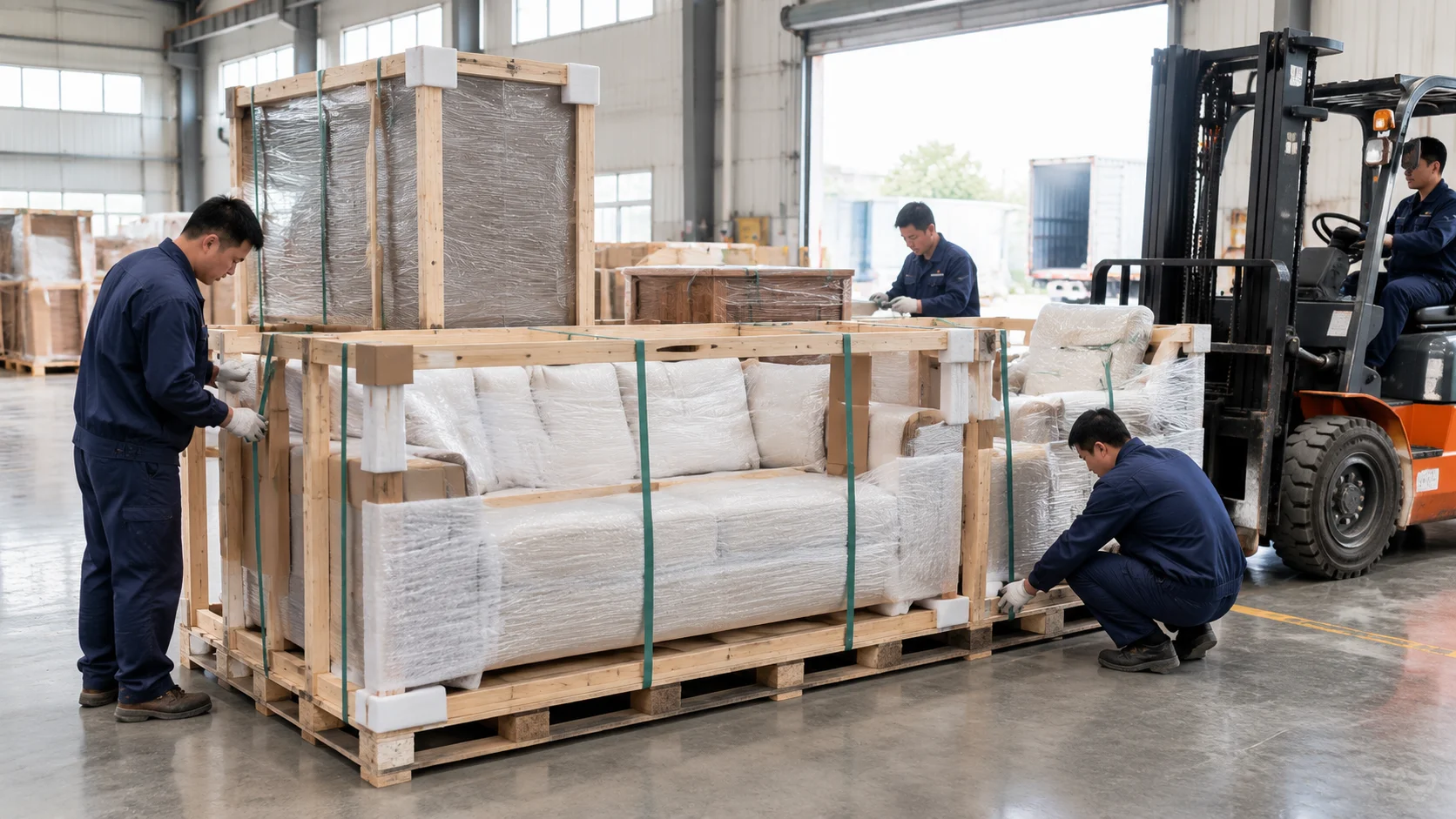
Protect edges and finished surfaces, immobilize moving parts and prevent hardware from contacting the finish. Design blocking and bracing for the weight and intended handling. A thick crate can still fail if the item moves inside it or the lifting load is carried by an unsupported panel.
Keep approved packing drawings and photographs showing internal protection before closure, then the sealed crate and marks. Identify the safe lifting method where required. Test a representative packed configuration using an appropriate professional method; an informal warehouse drop is not a certification for heavy furniture.
Keep inspection and claim evidence usable
Before dispatch, confirm quantities, condition, dimensions and the approved packing configuration. Arrange the importer, broker and product evidence before loading; no provider can responsibly guarantee a fixed clearance time regardless of examination or missing information.
At delivery, record visible package damage and follow the carrier's applicable inspection and reporting process. Preserve packaging and photographs when a claim is possible. Agree who arranges repair, replacement or return and how the buyer receives a usable remedy. A complete furniture shipment ends with a safe, agreed handover and accountable condition record, not merely a vessel-arrival message.