
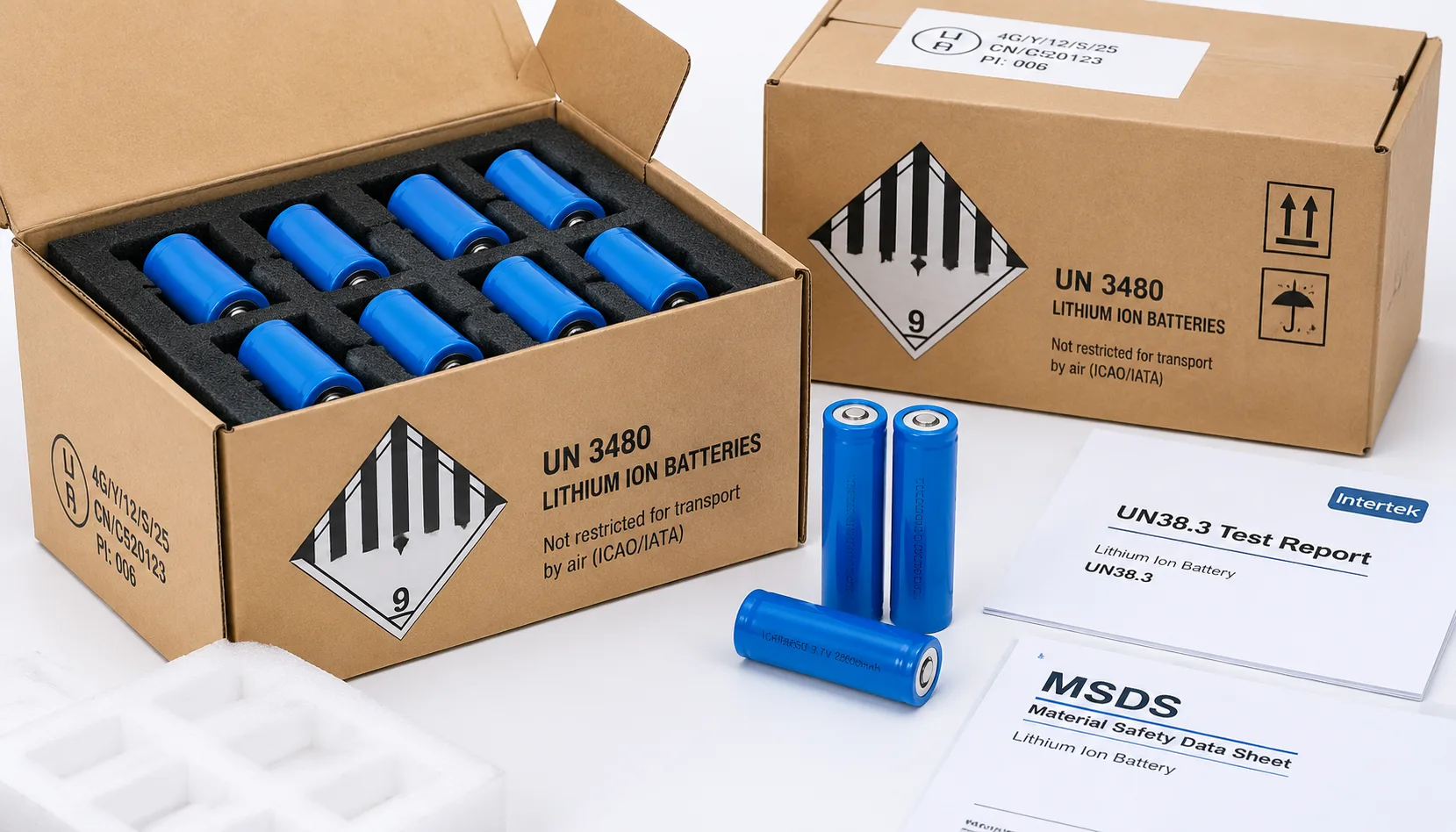
For China-origin lithium-ion shipments, the first decision is whether the cargo is batteries on their own, batteries packed with equipment, or batteries installed in equipment. UN3480 and UN3481 describe different transport configurations. Choosing a convenient label without verifying the physical product can send the shipment into the wrong packing and acceptance process.
This guide focuses on the classification data pack and its handoff to a qualified dangerous-goods reviewer. It does not provide a universal packing instruction. The applicable mode, current rules, product condition and carrier variations must be checked for the actual consignment.
Verify chemistry and configuration before selecting the number
Obtain the manufacturer's battery specification and identify the chemistry. Lithium-ion and lithium-metal batteries use different UN entries. Do not classify a product solely from the generic word lithium on a sales listing.
For lithium-ion batteries, distinguish standalone batteries under UN3480 from the relevant UN3481 configuration involving equipment. A spare battery lying beside a device and a battery installed in that device are not interchangeable descriptions. Battery-powered vehicles and other specialized products may need another entry rather than either of these choices.
Power banks need particular attention. Their purpose is supplying power to other equipment, so a case containing charging electronics does not automatically make them ordinary equipment with a contained battery. The qualified reviewer should resolve the actual product description before a booking is requested.
Make the model identity traceable to the supporting records
The product file should connect the shipped model to the cell or battery model, manufacturer, rated electrical characteristics, configuration and relevant test documentation. Record the number of cells or batteries in each package and the finished package weight.
Check that a test summary describes the actual model and design being supplied. A generic report for a different battery cannot be repaired by attaching the seller's SKU to its cover. Investigate changes in the battery design, supplier or installed configuration before reusing an earlier approval.
Keep the supporting files accessible to the people performing the review and acceptance. An SDS, a test summary, a dangerous-goods declaration and a commercial invoice serve different purposes. One document should not be represented as replacing all the others.
Obtain a mode-specific preparation decision
For air transport, consult the current IATA guidance and the operator's requirements. The 2026 battery guidance describes standalone lithium-ion restrictions, including the normal 30% state-of-charge limit and restrictions on passenger-aircraft carriage, with specified approval provisions. It is unsafe to extrapolate those provisions to every battery configuration.
Ask the reviewer to identify the applicable packing instruction and section, quantity limits, state-of-charge treatment, marks, labels, documentation and training responsibilities. Record the edition and operator variation used. A carrier accepting a previous shipment does not automatically approve a changed product or route.
For a sea movement, use the applicable IMDG requirements and carrier acceptance process instead of copying the air checklist. The US Department of Transportation's battery shipping resources also illustrate why mode and configuration matter. A change of transport mode requires another assessment.
Control preparation without creating a misleading appearance of compliance
The preparation instruction should address protection against short circuits, movement, damage and unintended activation as applicable. Specify the approved materials and assembly method, with a sample or photographic record that the team can follow.
Verify marks and labels against the approved classification, not a generic sticker kit. Preserve evidence of the completed package and its identity. A professional-looking carton is not proof that its contents or documentation meet the applicable requirements.
FulfillNexa by SBT's role in a battery shipment should be confirmed through the agreed preparation and routing scope. Do not infer that a warehouse, by accepting ordinary electronics, has approved every dangerous-goods configuration or acts as a testing laboratory.
Stop exceptions from entering the ordinary outbound queue
Damaged, defective, recalled, waste or unidentified batteries need explicit review. Do not describe them as ordinary new retail stock to obtain a simpler service. Separate the affected goods and seek the appropriate handling decision rather than experimenting with a package or transport route.
Before dispatch, reconcile the approved product, physical packaging, declared classification and carrier booking. Keep the reviewer decision, supporting records and acceptance evidence together. That traceable chain is more useful than a checklist claiming every lithium shipment follows the same rule.
Sources and verification links
Operational rules can change. Check the linked primary sources and confirm shipment-specific requirements before booking.
- IATA2026 battery guidanceInternational Air Transport Association
- US DOT battery shipping resourcesU.S. Department of Transportation