
Why Shopify sellers choose China fulfillment
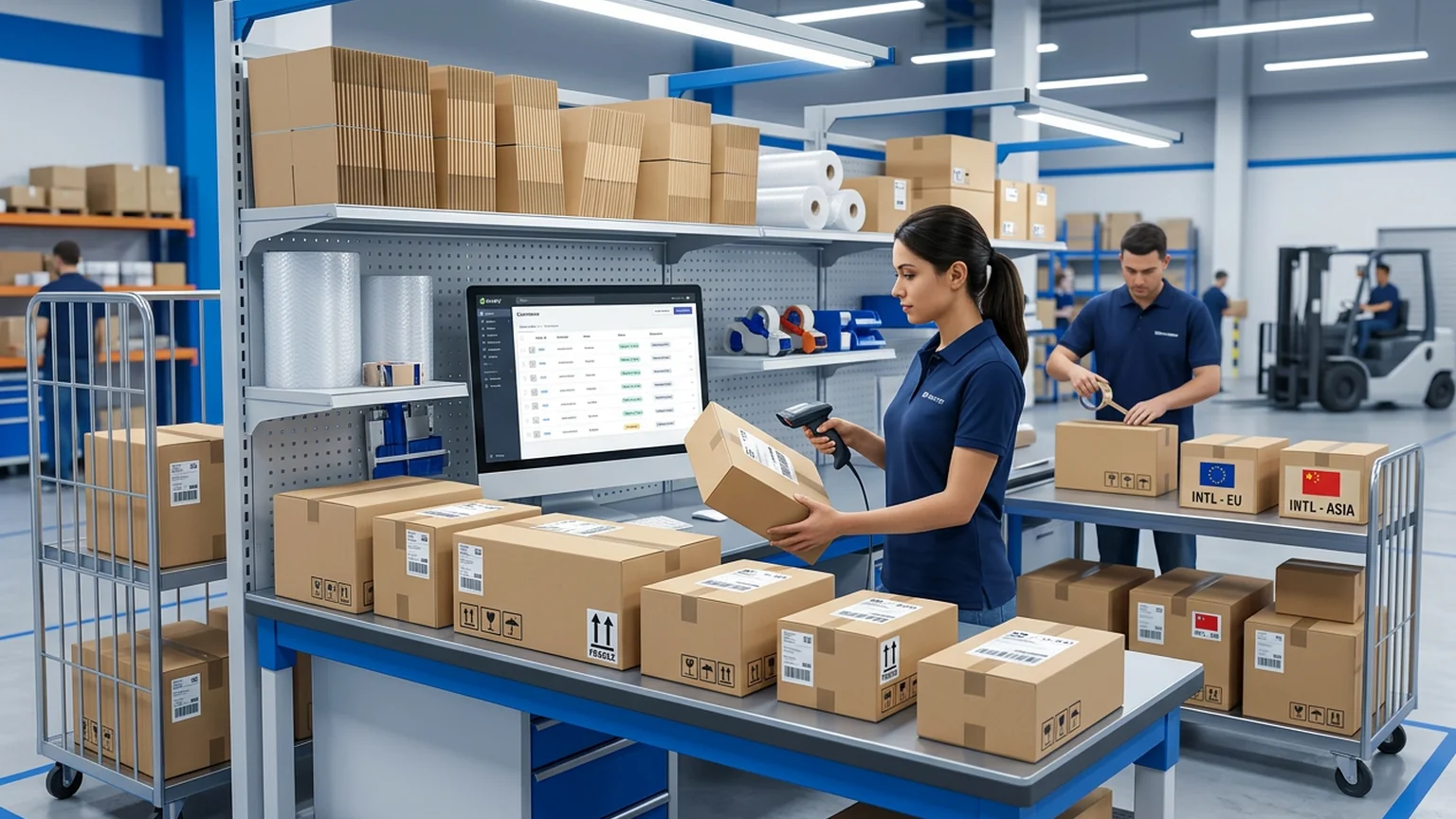
Shopify sellers sourcing products in China can reduce lead time and shipping cost by fulfilling directly from a China warehouse. Orders flow from the store to the warehouse, which picks, packs and dispatches individual parcels to overseas customers.
This avoids the capital commitment of shipping bulk inventory to an overseas 3PL before demand is proven. It also keeps the brand close to suppliers for restocking and product changes.
Order sync: connector or file
Confirm the specific platform, connector or order-file workflow during onboarding. Some sellers use a native Shopify app; others export a daily CSV. Test SKU mapping, address fields, cancellations and tracking updates before normal operation.
A platform name alone does not establish that an integration is active or that every function is supported. Verify the actual data fields that flow in each direction.
SKU mapping that prevents mis-picks
Each Shopify variant should map to a unique warehouse SKU or barcode. Size, color and bundle combinations need explicit identification. Similar-looking variants require a barcode scan, not a visual description.
Before launch, walk through a sample order end-to-end: store order → warehouse pick list → packed parcel → tracking number → store update. Any mismatch in this chain causes a mis-ship.
Packing rules and branded experience
Shopify stores often have specific packing expectations: branded mailers, insert cards, gift wrapping or bundle configurations. Confirm these in the operating scope with an approved example.
The warehouse should not substitute materials or skip inserts without approval. Define the replenishment process for packing materials so the brand never runs out mid-fulfillment.
Tracking and customer communication
Tracking numbers should flow back to Shopify automatically or via a confirmed update process. Customers expect a tracking link within 24 hours of order placement. Confirm the carrier, the tracking format, and the update frequency.
Note that a tracking number is not evidence of physical carrier acceptance. Use the acceptance scan and subsequent events to follow progress.
FAQ
Does Shopify connect automatically to China warehouses?
Some connectors exist, but each needs testing. Confirm SKU mapping, address fields, cancellations and tracking callbacks before going live.
Can I use custom packaging with Shopify orders?
Yes, with an approved packing example and material replenishment plan. The warehouse should not substitute materials without approval.
How fast will my Shopify customers receive orders?
Request a dated estimate for the specific origin, destination and channel. Confirm whether it starts at order release, dispatch or carrier acceptance.
What happens when a customer cancels?
Define the cancellation cut-off in the operating agreement. Orders already packed or handed to the carrier may not be cancellable.
Sources and verification links
Operational rules can change. Check the linked primary sources and confirm shipment-specific requirements before booking.
- Shopify — FulfillmentOfficial source
- Shopify — Shipping settingsOfficial source