
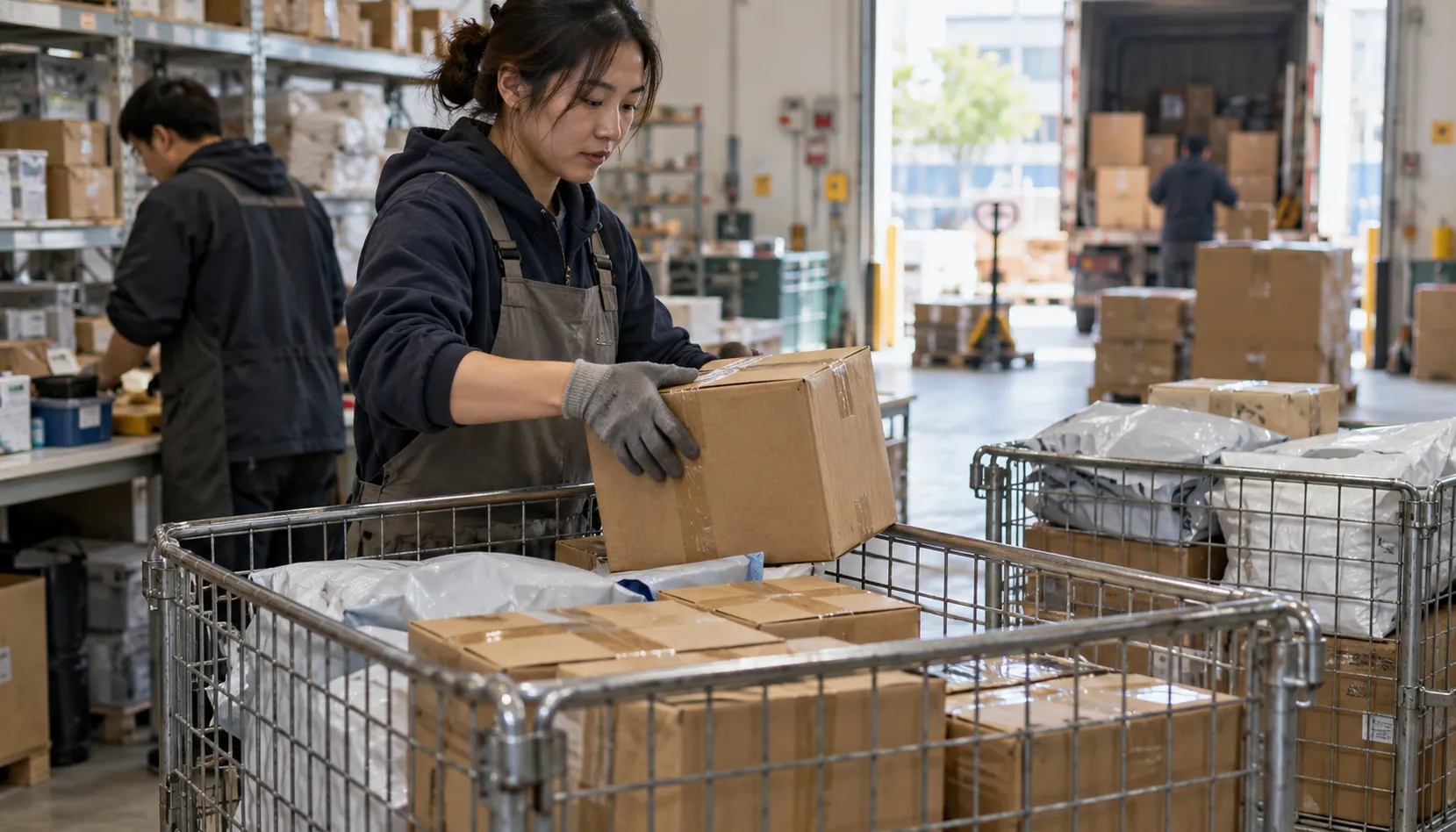
Small parcels from China to Australia need two separate checks before the service is selected. One concerns customs and GST treatment; the other concerns whether the goods and packaging meet Australia's import and biosecurity conditions. A low-value parcel can still be inspected or require specific information.
Screen the contents before buying the label
Identify the actual materials and use of the product. Food, plant or animal material, timber and used goods can raise questions that a generic accessories description does not resolve. Packaging can also introduce a biosecurity issue independently of the product.
The Australian Department of Agriculture's import-goods guidance directs importers to BICON for commodity-specific conditions. Use the relevant case for the actual goods and origin instead of assuming that all new retail products are unrestricted.
Obtain the supplier information needed to make that assessment before dispatch. If the goods require treatment, a permit or supporting evidence, a faster parcel service is not a substitute for satisfying the requirement.
Keep low-value border treatment separate from GST
Australian Border Force's online-buying guidance distinguishes goods valued at AUD1,000 or less from goods above that value. It also explains that GST can be collected at sale for low-value imported goods and identifies exceptions such as alcohol and tobacco.
The practical consequence is to record the sale's GST handling and the shipment's clearance path separately. A statement that no border duty is normally collected on a qualifying low-value item should not be turned into a promise that the purchase has no tax or processing consequences.
For cargo and postal channels, confirm the declaration arrangement with the provider. Do not copy a cargo clearance instruction onto a postal product without checking its applicability.
Make the declaration describe the actual order
Keep product description, quantity, value, origin and customer details consistent across the order and shipping data. Include material information where it matters to import conditions. Do not describe a commercial sale as a gift to try to change the treatment.
If several products are combined, review the completed consignment rather than only the individual item values. The warehouse should know which products belong in the package and which supporting information must travel electronically or with it.
For FulfillNexa by SBT's China-based packing, provide approved commodity descriptions and any required handling instruction before releasing the order. A warehouse should not have to infer a product's material composition from its appearance.
Compare the actual Australian delivery coverage
Use the final postcode and address type when obtaining offers. Confirm the last-mile provider, tracking availability, remote-area treatment and handling of an unsuccessful delivery. A national coverage statement does not establish the same service for every Australian address.
Separate the quoted transport time from warehouse preparation and any inspection or information request. Build the customer promise around the full order journey, with a clear update process if release is delayed.
Ask what happens if a parcel cannot be admitted or delivered. Return, storage, treatment and disposal can have different availability and charging conditions. Understand who can authorize an action before an exception occurs.
Pack for both protection and inspection
Use suitable clean packaging and keep the goods identifiable. For materials that can attract biosecurity attention, follow the applicable conditions rather than add untreated packing materials without review.
Keep the final dimensions and gross weight so the chosen service can be priced accurately. Record the package version used for the order. If the carrier or an inspection process opens the parcel, the order and contents should remain traceable through the available records.
Test one complete order cycle
Trial representative products and delivery areas before expanding volume. Reconcile the sale's tax record, dispatch information, provider invoice, tracking handover and customer receipt. A successful urban delivery does not prove acceptance of a different commodity or service to a remote address.
Keep questions and outcomes by product family. That makes the next order easier to screen and prevents an exception from being repeated because the only record was a customer-service conversation.
The reliable Australian small-parcel process is the one that checks admissibility before release and keeps tax, transport and delivery responsibilities visible. Parcel size alone cannot do that work.
Sources and verification links
Operational rules can change. Check the linked primary sources and confirm shipment-specific requirements before booking.
- Australian Department of Agriculture's import-goods guidanceAustralian Department of Agriculture, Fisheries and Forestry
- Australian Border Force's online-buying guidanceAustralian Border Force