
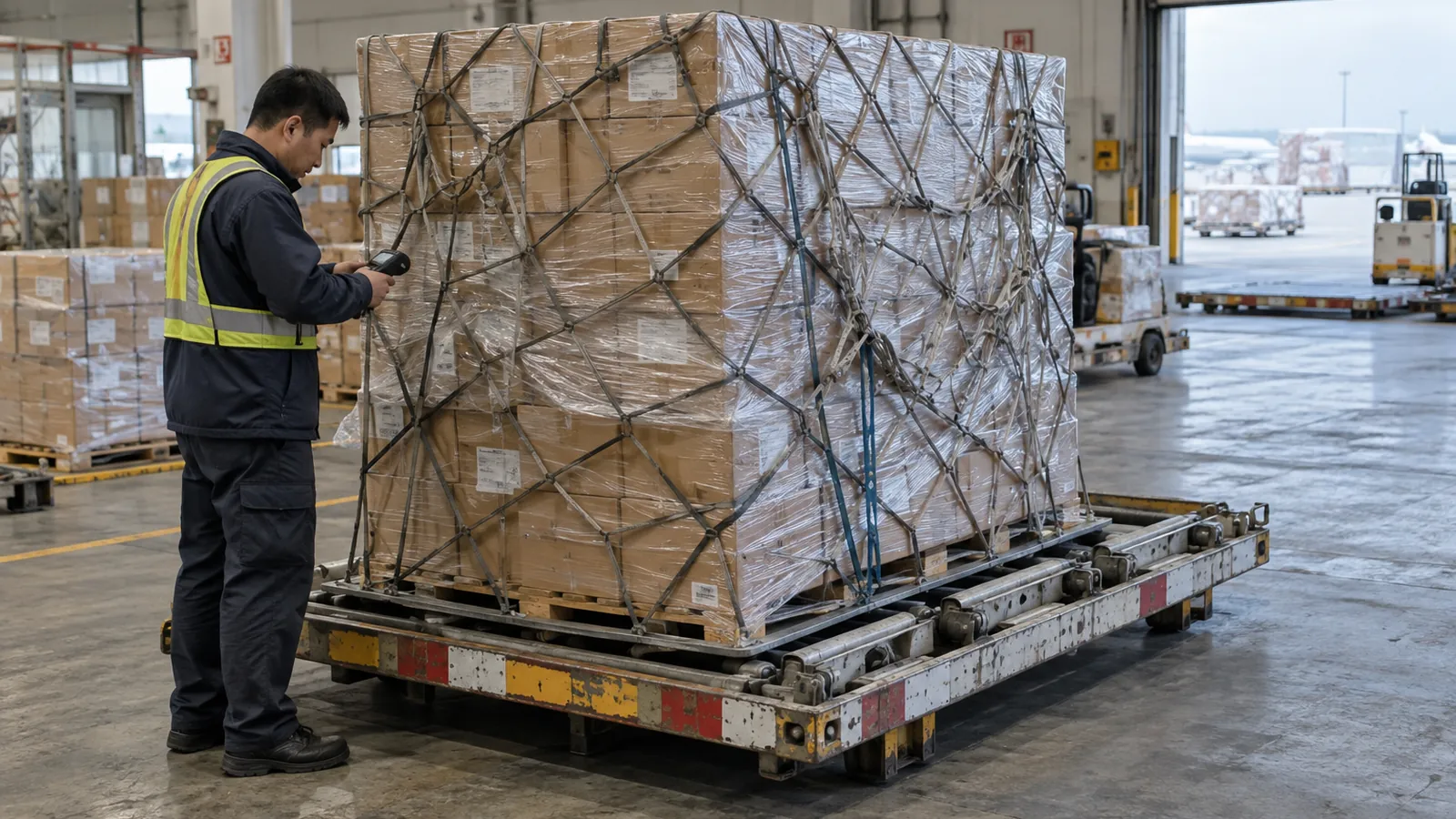
An urgent air shipment from China needs a confirmed operational plan, not simply an expensive service name. The relevant deadline is when the consignee can use the goods. Work backwards through delivery, import release, airport handling, flight acceptance and collection before choosing an expedited booking.
Translate the emergency into a delivery requirement
Suppose an exhibition team needs replacement components before installation begins on Friday. Arrival at an overseas airport on Friday does not solve that problem. The team needs customs clearance, transport to the venue and an accepted delivery appointment before its installation deadline.
State the required location, local time and latest usable arrival. Identify whether partial delivery would help. Sending the components that unblock installation can be more useful than moving an entire order at the highest available priority.
Calculate the cost of missing that deadline separately from the goods' value. A low-value spare can justify urgent transport when it prevents a larger interruption. Conversely, an expensive shipment does not automatically need a premium flight if the customer has enough stock.
Confirm what can physically be tendered
Ask the supplier or warehouse for final packed dimensions, gross weights, commodity details and the time the cargo will actually be ready. A production promise is not the same as packed goods available for collection.
Check dangerous-goods status early. Batteries, liquids and other regulated contents can change the available service and acceptance process. IATA's dangerous-goods documentation resources distinguish current requirements from forthcoming editions. Paying for urgency does not remove classification, packaging or documentation obligations.
If FulfillNexa by SBT is preparing the stock in China, request a physical readiness confirmation tied to the specific cartons. That is stronger evidence than an order screen saying processing, and it avoids booking against goods still waiting for a supplier correction.
Compare the actual expedited paths
A priority airfreight product, an express parcel service and a dedicated emergency solution can use different collection, handling and delivery arrangements. Ask each provider which stages it controls and which depend on another party.
DHL's airfreight product information describes priority services using scheduled flights. Availability for an actual China-origin shipment still requires confirmation. Next-flight-out should be treated as a booking specification to verify, not proof that the next departure has accepted the cargo.
Request the origin cutoff, planned routing, confirmed capacity status, transfer points and destination contact. Distinguish a requested flight from a confirmed booking and a confirmed booking from actual departure. Each milestone has different evidential value when the deadline is tight.
Remove the avoidable destination delay
Send commercial and product information to the responsible importer or broker before collection. Confirm classification questions, permits, payer details and any required importer identification. A fast flight cannot correct an unresolved right-to-import problem.
Arrange the final delivery in parallel. Check the address, site opening hours, receiving contact, unloading requirements and whether weekend access is possible. For a trade show, verify the venue's actual receiving rules rather than using a nearby office address as a convenient substitute.
Keep a single escalation owner across those handovers. That person should know who can correct a document, authorize an expense and accept an alternative routing without waiting for several disconnected conversations.
Build a fallback before paying the premium
Define what happens if the cargo misses acceptance, is offloaded or needs a customs query answered. The fallback might be another departure, a different destination airport or a smaller split shipment. Each option needs its own cost and delivery implications.
Set an approval ceiling and a decision deadline. Without those, a provider may either delay while seeking permission or commit the business to an expensive change nobody intended to authorize.
Insurance and service guarantees deserve separate review. Delay-related commercial losses are not automatically covered by cargo insurance, and a carrier's refund conditions are not compensation for the whole missed event.
Track evidence until the goods are usable
Follow collection, acceptance, departure, arrival, release and delivery as separate events. Request the underlying milestone when a status is ambiguous. A flight number on a booking confirmation is not a departure record.
After delivery, record which part of the emergency created the greatest risk. The lesson may be to hold a critical spare in stock or validate documents earlier. Urgent transport can rescue one shipment; a documented correction can prevent the next emergency.
Sources and verification links
Operational rules can change. Check the linked primary sources and confirm shipment-specific requirements before booking.
- IATA's dangerous-goods documentation resourcesInternational Air Transport Association
- DHL's airfreight product informationDHL