
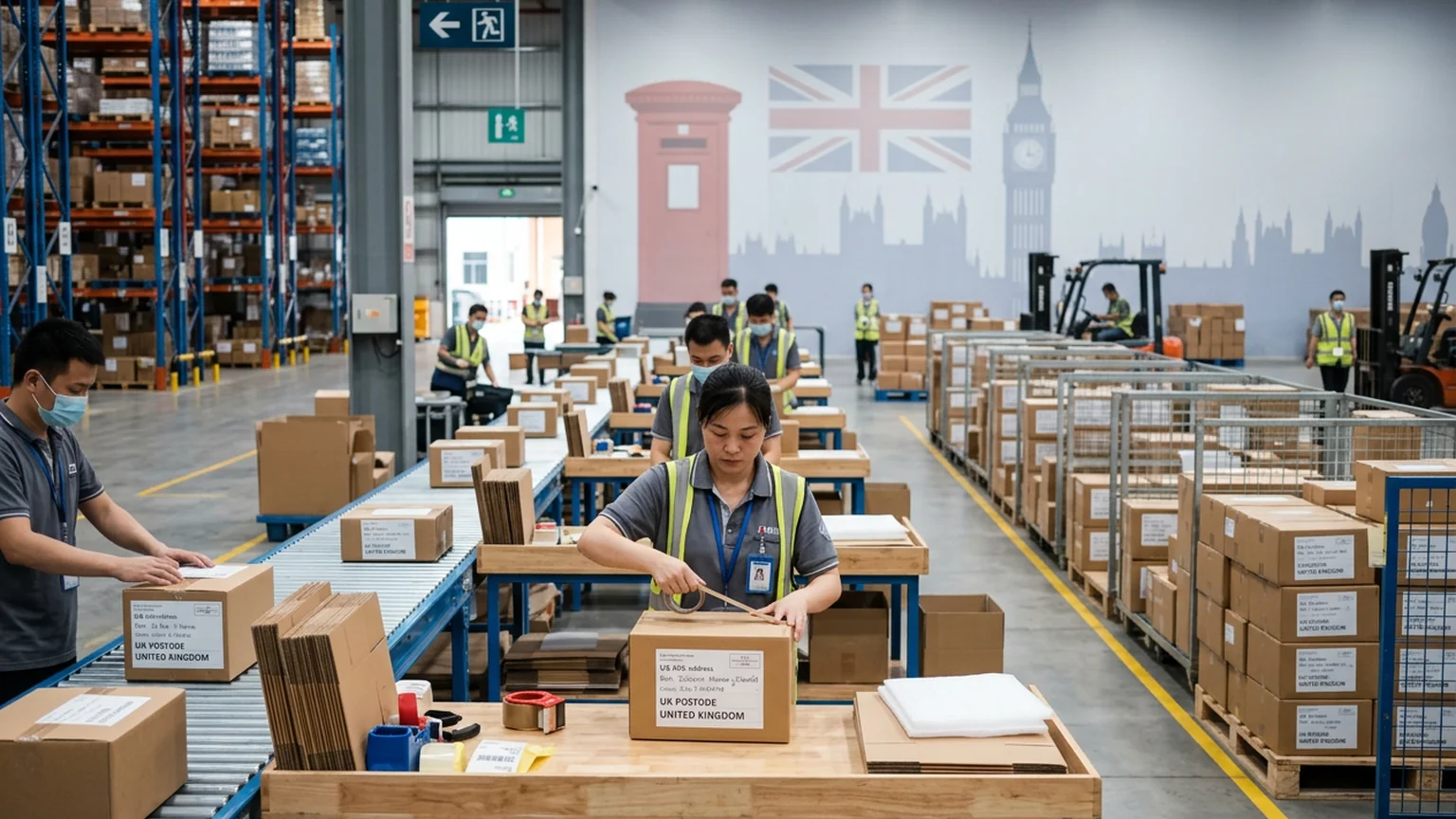
The United Kingdom is a compact, high-density, high-expectation market with excellent parcel infrastructure, and it is also a jurisdiction that rewrote its import rules twice in five years and then opened another review of the low-value regime. Sellers who took a 2020 guide and kept shipping are the ones still getting parcels held.
Two facts explain most UK outcomes: the VAT treatment of a low-value consignment depends on its value relative to the £135 threshold, and the customs position is separate from the VAT position.
The £135 rule, and why it is not a duty exemption
Under the regime introduced on 1 January 2021, where goods with a value of £135 or less are sold directly to a UK customer, the overseas seller or the online marketplace is generally responsible for charging UK VAT at the point of sale and remitting it through a UK VAT registration. In that case import VAT is not charged again at the border on the same goods.
For consignments above £135, the position reverts to the familiar one: VAT and any duty are assessed on import, and the party named as importer of record is liable. The carrier will not absorb that silently; it will be collected from someone, usually the customer, plus an administration fee.
Crucially, the £135 rule is a VAT arrangement. It does not exempt the goods from duty. Duty liability depends on the commodity, its classification, its origin and its value, and there are separate lower thresholds that apply to particular consignee and postal routes. Because the details here have been the subject of government consultation on the future treatment of low-value imports, confirm the current rules on GOV.UK before you set prices or write checkout copy.
| UK decision | What determines it | Common costly mistake |
|---|---|---|
| Who charges VAT | Consignment value against the £135 threshold, and whether a marketplace is deemed supplier | No UK VAT registration while selling under the threshold |
| Whether duty is due | Commodity, classification, origin and value, separately from VAT | Treating £135 as a duty-free allowance |
| Who is importer of record | The commercial and delivery terms you chose | Discovering the buyer became liable on delivery |
| Market access marks | UKCA or accepted CE for the category, plus UK responsible-party details | Assuming EU paperwork covers Great Britain |
| Northern Ireland route | Windsor Framework arrangements for goods moving into NI | Applying GB handling to NI orders |
| Packaging obligations | Producer responsibility reporting and plastics packaging rules | Selling before registrations exist |
| Final-mile carrier | Size, weight band, delivery window and pickup options | A parcel network used beyond its weight limit |
Registration: the decision you cannot defer
Selling into the UK at scale normally requires a UK VAT registration, and under the low-value regime a seller collecting VAT at checkout must be registered to do so. That registration also matters commercially: a business that cannot produce a UK VAT number and the correct importer details is relying on carrier-brokered entries, which are workable at low volume and a hard ceiling above it.
The EORI question is separate. An EORI number is used in UK customs procedures, and the EU's own EORI number does not serve for UK filings after the transition. Get the number you need before the first declaration rather than during an examination.
Product marks and responsible parties
UKCA marking exists as the United Kingdom's own conformity mark for regulated consumer and industrial goods. For many product categories the UK has extended acceptance of CE marking beyond the original deadline, so the practical answer differs by sector: some goods can be placed on the GB market on CE, others require UKCA, and some product areas have their own timelines. Check the specific guidance for your commodity.
Where the UK regime requires a UK-based responsible person or approved body, EU-established arrangements do not automatically substitute. Labeling, warnings and instructions are also assessed on the unit, and "the EU version was fine" is not a defense.
For the cross-cutting compliance framework, see our guide to EU IOSS and UK HMRC import VAT for China dropshipping, which handles the two jurisdictions side by side.
Packaging and producer responsibility
The UK operates a producer responsibility scheme for packaging that obliges qualifying businesses to record and report packaging data and to contribute to disposal costs, with obligations differing between larger and smaller producers and between those who handle packaging and those who supply it. Alongside it sits a plastics packaging tax on packaging with less than thirty percent recycled content, charged per metric ton above a registration threshold. Electrical and electronic equipment and batteries have their own UK register obligations where they fall in scope.
These are registrations you make, not services a warehouse can perform for you. Marketplaces check the ones they are obliged to check.
Northern Ireland is a separate problem
Goods moving into Northern Ireland sit under the Windsor Framework arrangements, which keep Northern Ireland aligned to particular EU rules for goods. In practice that means an order routed from China to a Belfast address can follow a different regulatory path from one routed to Leeds: EU-style conformity requirements, EU VAT treatment rather than the GB £135 mechanism, and different paperwork. Treat NI as a distinct destination in your checkout, your lane selection and your label artwork, not as part of "UK".
Clearance data and the final mile
Great Britain requires entry safety and security data for goods arriving from outside the UK, and commercial parcels move through the Customs Declaration Service with the importer's details attached. As in every other market, the declaration quality decides the flow: a specific description, the correct commodity code, an accurate value and a stated origin. Understated values are not a saving, they are a customs offense that also destroys your claim if the parcel goes missing.
For the last mile, the UK has unusually strong pickup-point and locker coverage and a mature economy of delivery attempts. Compare lanes on weight and size bands, whether the network delivers to your customer type, the quality of proof-of-delivery evidence, and what happens on a failed attempt. Royal Mail and Evri dominate low-weight ecommerce volumes, DPD and Amazon Logistics are strong on timed and high-visibility delivery, and pallet products for bulky goods need a freight service with a delivery window. Get the carrier's peak deadlines in writing before you commit a promise. Our guide to DDU versus DDP terms for the US, EU and UK explains how the delivery terms decide who signs for the money.
Returns
UK consumer distance-selling rules give buyers a fourteen-day cancellation right, and the allocation of return freight costs depends on whether the trader told the consumer who pays. Write the returns decision per SKU before launch. For low-value items, a UK return address with local inspection and a dispose-or-liquidate threshold is normally cheaper than re-export; consolidate genuinely valuable units into one commercial shipment instead. Our cross-border returns playbook covers the reverse-leg trade-offs.
Frequently asked questions
Is £135 a duty-free threshold?
No. It is the value line that decides who charges UK VAT on a direct-to-consumer consignment. Duty is assessed separately by commodity, classification, origin and value, and lower thresholds apply on certain routes. Verify the current figures before pricing.
Do I need a UK VAT number to sell from China?
If you are selling consignment-value goods at or below £135 directly to UK consumers, the regime generally places the VAT charge on you, which requires a UK registration. Ask your tax adviser to confirm the position for your volume band and channel.
Is CE marking still accepted in Great Britain?
For many product categories the UK has extended recognition of CE marking, but the answer varies by sector and some goods require UKCA with a UK-based responsible party. Check the guidance for your specific commodity rather than relying on a general rule.
Are shipments to Northern Ireland handled like Great Britain?
No. Northern Ireland remains aligned to specific EU goods rules under the Windsor Framework, so conformity requirements and VAT treatment can differ. Configure NI as its own destination.
Why is my UK parcel held at customs?
Most commonly: an inadequate goods description copied from a listing title, a wrong commodity code, a value that does not match the commercial reality, or a missing importer registration. Fix the data at origin; a held parcel cannot be corrected by calling the carrier.
Quellen und Überprüfungslinks
Operative Regeln können sich ändern. Prüfen Sie die verlinkten Primärquellen und bestätigen Sie sendungsspezifische Anforderungen vor der Buchung.
- HMRC — VAT on importsOffizielle Quelle
- UKCA markingOffizielle Quelle
- HMRC — Charging VAT on goods sold direct to customers in the UKOffizielle Quelle
- UK Consumer Contracts Regulations — withdrawal and returnsOffizielle Quelle
- Royal Mail — International servicesOffizielle Quelle